

5–7 Year Horizon: Costa Blanca Property Areas Backed by 2026–26 Data
· 10 min read

Costa Blanca remains an investable market in 2026, with two area types standing out: premium coastal enclaves for capital growth and established tourist towns for steady rental demand. The region’s transaction volumes and international buyer interest support both strategies, though yields have tightened. We recommend building a local shortlist by objective and confirming mortgage eligibility before committing to a specific town.
TL;DR:
- International buyer interest remains strong, especially in premium coastal towns like Jávea, supporting capital growth prospects despite tighter yields.
- Prices in Alicante city peaked at around 2,721 euros per square metre in August 2026, with substantial variation based on location and property type.
- Gross rental yields have fallen to approximately 6.5 percent in the second quarter of 2026, requiring careful modeling of net returns after costs.
- Investor focus should be on micro-location factors such as transport links, community fees, and seasonal demand patterns, particularly in towns with active new-build pipelines.
- Securing mortgage pre-approval and understanding total costs, including taxes and community fees, is essential before making purchase commitments in the region.
Table of Contents
- Market overview: transaction volumes and demand drivers in 2025 to 2026
- Price and rental trends: benchmarks and yield context
- Best areas and towns: town-by-town notes keyed to investor goals
- Investment strategy and finance: how to evaluate a Costa Blanca purchase
- Risks and regulation: short-term rentals, planning and market risks
- Local perspective and practitioner tips from Fiesta Properties
- Timing and next steps for mid-term investors
- How Fiesta Properties can help you execute your purchase
- FAQ
- Sources
Market overview: transaction volumes and demand drivers in 2025 to 2026
Spain’s property market showed renewed strength through 2025, and the Costa Blanca benefited directly from that momentum. Nationally, property transfers reached 2,381,840 in 2025, a rise of 7.6% on 2024, with 1,375,494 recorded sales within that total. That scale of activity points to a market with genuine liquidity, which matters for investors who may need to exit a position within a five to ten year horizon rather than hold indefinitely.

Property transactions increased notably alongside rising transfer volumes in 2025, according to provisional INE data, a signal that buyers and sellers are finding each other more readily than in the subdued years that preceded this cycle.
Several forces are shaping demand along the Costa Blanca specifically:
- International buyers continue to anchor demand in Alicante province, drawn by climate, flight connectivity and established expat communities.
- The buyer profile is shifting younger, with remote workers and early retirees joining the traditional retiree base.
- Premium buyers are increasingly active in towns such as Jávea, where luxury segment activity has strengthened according to Idealista’s coverage of local market reporting.
- New-build pipeline remains active in the southern Costa Blanca, while resale stock dominates turnover in longer-established northern towns.
This mix of new-build and resale supply gives investors choice: off-plan purchases secured early tend to offer better entry pricing, while resale properties in mature developments offer immediate rental readiness. The combination of rising transaction counts and sustained international interest supports a reasonably constructive view on capital appreciation, though it varies sharply by micro-location, which is why area selection matters more than a single regional verdict.
Price and rental trends: benchmarks and yield context
Price benchmarks across the Costa Blanca vary enormously depending on proximity to the coast and the town’s positioning. Alicante city itself touched new highs in 2026, with average asking prices reaching 2,721 euros per square metre in August, though neighbourhood variation within the city is substantial. Premium coastal towns such as Jávea sit well above typical regional averages, reflecting their international buyer base and limited new-build supply.
Rental yields, meanwhile, have compressed. Gross residential rental return fell to approximately 6.5% in Q2 2026, down from around 7.2% a year earlier, according to Idealista’s quarterly rentability analysis.
Gross yield rarely survives contact with real running costs. The deductions that typically narrow the gap include:
- Community fees, which vary widely between apartment complexes with pools and gated villa developments.
- Non-resident income tax, which KPMG notes differs by residency status and should be modelled on net rather than gross income.
- Property management fees for owners who are not resident year-round.
- Maintenance, insurance and periods of vacancy between tenancies.
Given this compression, we suggest modelling returns conservatively rather than anchoring expectations to headline gross figures.
Best areas and towns: town-by-town notes keyed to investor goals
Area selection is the single most consequential decision an investor makes on the Costa Blanca, more so than timing the broader market. Towns fall broadly into three groups depending on what an investor is trying to achieve.
- Jávea and Moraira suit buyers prioritising capital growth over immediate yield. Both towns carry a strong international buyer share and limited developable coastline, which has historically supported price resilience. Product here tends towards villas and larger apartments at the upper end of the regional price scale, and the investor profile is typically someone planning a longer hold who values scarcity over rental turnover.
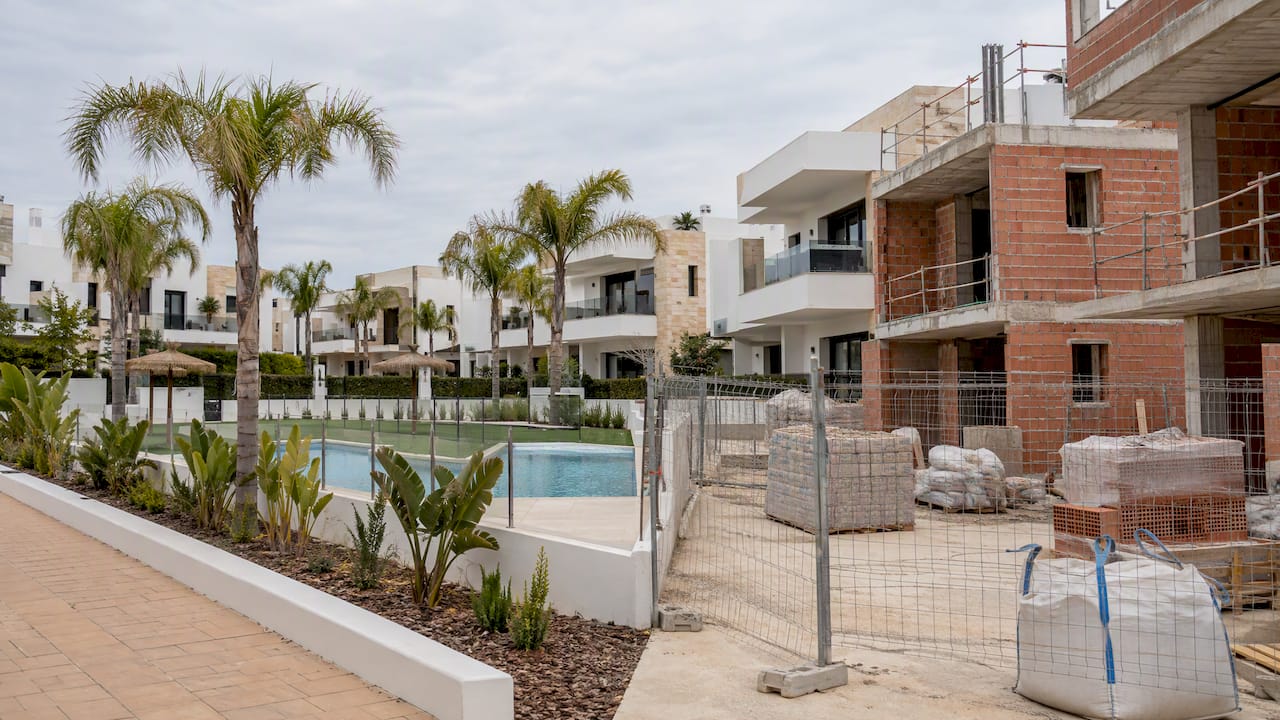
- Torrevieja and Orihuela Costa work well for investors chasing rental demand rather than headline appreciation. These towns have dense tourist infrastructure, year-round services and strong flight connectivity through Alicante airport. New-build apartments and townhouses dominate supply, pitched at a more accessible price band than the northern enclaves, and seasonal rental demand is well established, though it concentrates heavily in summer months.
- Guardamar del Segura and Playa Flamenca offer a middle path, combining reasonable rental demand with lower entry prices than Torrevieja’s most central zones. Guardamar in particular benefits from pine forest surroundings and a quieter profile than its larger neighbours, attracting families and longer-stay tenants rather than purely short-break tourists.
- Los Montesinos, Algorfa and Ciudad Quesada represent the entry-level yield opportunities on the Costa Blanca South. Prices per square metre sit below the coastal towns, golf-course proximity in Algorfa supports a specific buyer niche, and these inland towns suit investors prioritising affordability and yield percentage over prestige.
For each of these towns, the same micro-location signals deserve attention before committing. International school access and healthcare provision influence long-term expat demand, particularly in family-oriented towns. Transport links, whether that is proximity to the AP-7 motorway or distance from Alicante or Murcia airports, affect both resale liquidity and tenant pools. The share of international versus domestic ownership in a given development also signals how a town will behave through a downturn, since concentrated foreign demand can amplify both upswings and corrections.
Before buying in any of these towns, inspect the local new-build pipeline carefully. A town with several large developments still under construction may see supply outpace demand in the short term, softening rental rates for existing stock. Check community fee schedules on comparable properties, since a development with extensive communal pools, gardens and security can carry meaningfully higher running costs than a smaller complex. Finally, map seasonal demand patterns specific to the town: Torrevieja’s rental market behaves very differently in January than in August, and that seasonality should inform any yield projection rather than being treated as a footnote. For a deeper look at how these towns compare, our guide on Costa Blanca property: where should you buy breaks down the decision by lifestyle and budget as well as investment goal.
Investment strategy and finance: how to evaluate a Costa Blanca purchase
A sound decision framework starts with matching objective to holding period. An investor targeting capital growth in Jávea or Moraira should plan for a hold of at least seven to ten years, since premium enclaves reward patience more than quick turnover. An investor chasing rental yield in Torrevieja or Orihuela Costa can reasonably expect returns within two to three years of letting, provided occupancy assumptions are realistic.
Financing is often the first practical hurdle for overseas buyers. Foreign buyers can typically access mortgage terms of up to 25 to 30 years, or until age 80, with loan-to-value ratios reaching 70%, rising to 75% with select lenders. Our mortgage guidance page covers how this process works in practice.
Budgeting accurately means going well beyond the purchase price. Costs to factor in include:
- Transfer tax or VAT depending on whether the property is new-build or resale, plus stamp duty on new builds.
- Notary and land registry fees, typically running to a few thousand euros depending on property value.
- Legal fees for conveyancing and due diligence checks.
- Ongoing community charges, local property tax (IBI) and non-resident income tax obligations.
Pro Tip: Ask for the community fee statement and the last two years of IBI bills before making an offer, not after signing the reservation contract.
Due diligence should confirm the property’s legal occupancy status, that it holds a valid licence of first occupation, a current energy performance certificate, and that it complies with local planning rules. For off-plan purchases, verify the developer provides a bank guarantee covering stage payments, a legal requirement that protects deposits if construction stalls. Our legal requirements guide sets out the full checklist for international buyers.
Risks and regulation: short-term rentals, planning and market risks
Spain’s regulatory environment around short-term lets is tightening. A national decree implementing a single rental registry and digital registration window is increasing transparency, which should reduce the volume of unregistered short-term stock over time, a change that benefits compliant landlords by narrowing unfair competition from unlicensed listings.
Beyond regulation, investors face genuine market risks. Seasonal demand concentration means towns heavily reliant on summer tourism can see significant income variation across the year. Overheated submarkets, particularly where international buyer demand has driven rapid price rises, carry a higher risk of correction than more balanced towns.
Sensible mitigations include:
- Modelling cash flow conservatively, assuming realistic rather than peak-season occupancy.
- Using professional property management rather than self-managing from abroad.
- Carrying adequate landlord insurance and confirming registration compliance before advertising a rental.
Readers weighing short-term against long-term letting strategies may find this independent comparison of rental models useful when deciding which approach suits their property and risk tolerance.
Local perspective and practitioner tips from Fiesta Properties
Experience with international buyers across the Costa Blanca and Costa Cálida provides insight into navigating everything from first enquiry through to completion and aftersales support. That experience surfaces patterns worth sharing.
- Buyers often underestimate community fees on larger developments with extensive communal facilities, which can erode projected yield significantly.
- Negotiation leverage improves considerably with mortgage pre-approval in hand, since sellers take funded buyers more seriously.
- Currency timing matters: a poorly timed transfer can cost more than a modest negotiation discount recovers.
Coordinating mortgage introductions, currency exchange and legal checks through a single local point of contact removes much of the friction that overseas buyers otherwise face managing several providers across time zones.
Timing and next steps for mid-term investors
For investors working a five to seven year horizon, pre-sale new-build purchases currently offer better entry pricing than comparable established stock, particularly in towns where the development pipeline is still active rather than nearing completion. Established resale properties suit buyers wanting immediate rental income without a construction wait.
Whichever route fits your plan, the practical next steps are the same: confirm your budget and secure mortgage pre-approval, shortlist two or three towns that match your objective rather than spreading attention too thinly, and arrange viewings, in person or virtual, before the next buying season brings fresh competition for the best units.
— Mike Kalia
How Fiesta Properties can help you execute your purchase
Practical support services can assist turning a shortlist into a completed purchase, including property search and shortlisting, in-person and virtual viewings, bilingual negotiation support, mortgage introductions, currency exchange and legal coordination handled by dedicated specialists.

Some services may charge no legal or currency exchange fees to clients, helping to keep the cost of buying more transparent than assembling the process independently. Our team can talk through live new-build opportunities across the Costa Blanca or help you check mortgage eligibility before you commit to a town. Start with a property search to see what currently matches your budget and goals.
This article is general information, not a substitute for advice from a qualified financial advisor. Consult a qualified financial professional about your own circumstances before acting on anything here.
FAQ
What is the 2% rule for property?
It does not translate directly to the Costa Blanca market, where gross yields of 6 to 7% are closer to local norms, so investors here should focus on net yield after local taxes and costs rather than importing a foreign benchmark.
Is investing in property in Spain a good idea?
Spain’s property market showed strong transaction activity in 2025, with transfers rising 7.6% on the previous year, supporting reasonable liquidity for investors. Whether it suits a particular investor depends on objective, holding period and town choice, since returns vary significantly by micro-location.
Where do most expats live in Costa Blanca?
Expats concentrate heavily in established coastal towns such as Torrevieja, Orihuela Costa, Jávea and Moraira, each offering different lifestyles from lively resort living to quieter retreats. Northern towns like Jávea tend to attract a notably international buyer base, as reflected in local luxury market reporting.
Are Spanish property prices falling?
Prices are not falling broadly; Alicante city reached new highs of 2,721 euros per square metre in August 2026. What has shifted is rental yield, which compressed to around 6.5% gross in Q2 2026, down from 7.2% a year earlier.
Sources
- Press Release: Statistics on Transfer of Property Rights (STPR). December 2025 and year 2025. Provisional data.
- El lujo inmobiliario crece en Alicante y se consolida como el tercer mercado más dinámico de España — idealista/news
- KPMG: Flash alert on tax treatment and implications for rental income (2025)


