





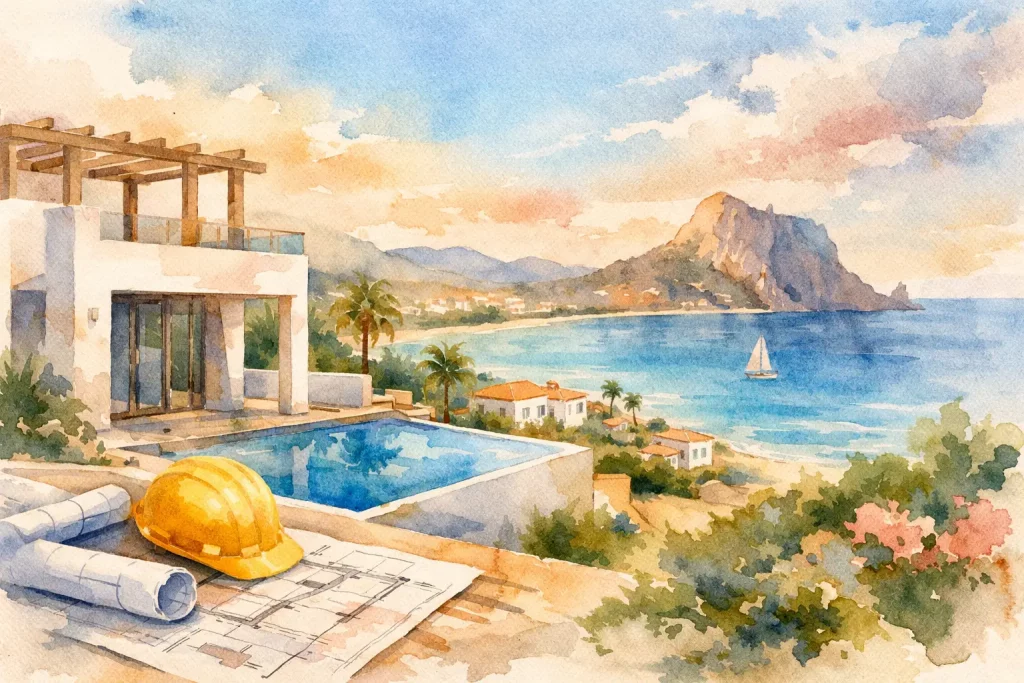
A new pool, a terrace designed for outdoor living and a home built to current energy standards are compelling reasons to consider off-plan property Costa Blanca. Yet the decision is about much more than choosing a stylish show home or the best view on a site plan. You are committing to a location, a developer, a delivery timetable and a payment structure before the keys exist.
For international buyers, that can feel like a significant leap. With the right checks and experienced local guidance, however, buying off-plan can be a clear, well-managed route to a Mediterranean home that suits the way you want to live.
Why buy off-plan property on the Costa Blanca?
The Costa Blanca offers a broad choice of new developments, from low-rise flats near beaches and amenities to bungalows, townhouses and detached villas close to golf, marinas and established towns. Costa Blanca North often appeals to buyers seeking dramatic coastline, characterful villages and a more traditional Mediterranean setting. Costa Blanca South tends to offer a wider range of resort-style communities, level terrain, golf locations and competitive price points. Murcia can also be worth considering where buyers want modern homes, space and easy access to the coast.
Off-plan buying gives you an earlier choice of plot, orientation, floor level and internal layout, subject to the developer’s options. That matters. A south or south-west facing terrace may be a priority for winter sun, while a shaded outdoor area can be more comfortable during the height of summer. Early buyers may also have access to homes with larger gardens, rooftop solariums or better positions within the community.
New homes are generally designed around modern expectations: open-plan living, efficient glazing, insulation, air conditioning pre-installation and communal facilities. For a holiday home, that can mean less immediate maintenance. For a relocation buyer, it can mean a property that is easier to manage year-round.
There is a trade-off. You will wait for completion, and the finished home must be assessed against contractual specifications rather than simply judged on the day of viewing. The strongest purchase decisions are made by treating the brochure as a starting point, not the full due diligence file.
Start with the area, not the artist’s impression
A development can look excellent on paper while still being wrong for your daily routine. Before reserving, think carefully about how you will use the property. A couple planning long winter stays may value supermarkets, healthcare, restaurants and an active all-year community. A family may put schools, beach access and airport journeys first. An investor may focus on local demand, community rules and holding costs.
Visit at different times where possible. A peaceful road in the morning may be busier in the evening, and a ten-minute drive on a map can take far longer in summer traffic. Check the practical details: walking distance to shops, slope of the streets, parking, nearby building land, views that could change and the route to the beach, golf course or town centre.
Ask what is included in the wider development plan. Is the communal pool already approved? Are commercial premises, roads or additional phases still to be built? A growing area can offer future appeal, but buyers should be comfortable with the possibility of construction activity after they move in.
How the off-plan buying process usually works
The process typically begins with a reservation agreement and a modest reservation payment that takes the selected property off the market for a defined period. During this time, your legal representative should review the paperwork and ensure the terms are acceptable before you progress.
You then sign a private purchase contract and make the next staged payment. Further payments may be due at agreed construction milestones, with the balance normally paid when the title deeds are signed before a Spanish notary. The precise schedule varies by development, so never assume one builder’s terms will match another’s.
Your lawyer should confirm that each payment is properly protected in line with Spanish requirements, usually through an individual bank guarantee or insurance policy. This is one of the most important safeguards in an off-plan purchase. It should identify the buyer, the property, the amounts protected and the circumstances in which funds can be reclaimed if the developer fails to deliver under the contract.
Keep every signed document, proof of transfer and guarantee in an organised file. Buyers who are purchasing from abroad should also make sure their payment references are clear and consistent with the contract.
Finance needs early attention
If you plan to use a Spanish mortgage, speak to a lender or mortgage adviser before choosing a property. Mortgage availability, lending criteria and valuations can affect the amount you need to have available in cash. Remember that taxes, legal costs, notary charges and registration fees sit alongside the purchase price, so your budget needs headroom.
Exchange-rate movements are another consideration for buyers paying in pounds or another currency. A staged payment schedule spreads transfers over time, which can be helpful for planning but also exposes you to currency fluctuations. Decide how much certainty you need before you sign.
What to check before signing
A good development is supported by documents, permissions and a contract that explains exactly what you are buying. Your independent Spanish lawyer should carry out the formal legal checks, but you should understand the questions being asked.
The contract should clearly state the property reference, plot or unit number, agreed price, VAT treatment, payment dates, expected completion date and what happens if delivery is delayed. Look for a realistic completion window rather than relying on a verbal indication. It should also set out the conditions for any changes to materials, finishes or layout.
Study the quality specification closely. Words such as ‘premium’ and ‘luxury’ are marketing terms; the specification is where you find the useful detail. Confirm the make or standard of kitchen appliances, air conditioning system, flooring, bathroom fittings, landscaping, lighting, pool equipment, parking and storage. If something is important to you, have it written into the contract or annex rather than relying on a showroom conversation.
You should also establish whether the advertised furniture package, solarium kitchen, electric shutters, charging point or pool heating is included, optional or merely shown for presentation. This avoids an unwelcome gap between expectation and handover cost.
Choosing a developer and development with care
Price is important, but it should not be the only measure. Look at the developer’s completed projects, build quality, after-sales approach and track record of delivering on schedule. An established builder with a clear process can provide reassurance, although every individual project still requires its own checks.
Ask how communication will work during construction. Will you receive progress updates and photographs? Who is your contact if you want to discuss choices or raise a query? Are site visits possible at defined stages? Clear answers are a positive sign, particularly when you are buying from another country.
At Fiesta Properties, local knowledge across Costa Blanca North, Costa Blanca South and Murcia helps buyers compare developments in context – not simply compare prices on a portal. The right choice may be the nearest beach location, the strongest year-round community, a golf setting or a quieter residential address. It depends on your priorities, not a one-size-fits-all recommendation.
Completion, snagging and the first months of ownership
Completion day is not the moment to stop checking. Before signing the deeds, arrange a professional snagging inspection where possible. This identifies defects or incomplete items such as damaged tiles, paint issues, appliance faults, drainage concerns, poorly fitted doors or missing finishes. Record everything clearly and agree how and when it will be rectified.
Your lawyer will also check that the necessary documentation is in place for occupation and that the property can be correctly registered. Once completed, arrange utilities, insurance and community administration promptly. If the home will remain empty for periods, consider practical arrangements for keyholding, ventilation, cleaning and periodic inspections.
New-build communities often take time to settle. Gardens mature, communal rules become established and final phases may still be underway. This is normal, but it is worth factoring into your expectations if you want an immediately finished, fully mature neighbourhood.
Questions worth asking before you reserve
Ask for the current price list and availability, then establish whether the price includes the items shown in the marketing material. Confirm estimated completion, payment dates, guarantees, annual community fees and the likely cost of any optional extras. Ask what nearby plots are intended for and whether there are restrictions on holiday rentals if rental income forms part of your plan.
Also ask how the developer handles defects after completion and whether there is a formal handover procedure. Direct, specific questions tend to produce clearer answers than general requests for reassurance.
The best off-plan purchase is not necessarily the newest launch or the home with the biggest advertised discount. It is the one where the area works for your life, the documentation protects your position and the finished specification matches what you have paid for. Take the time to compare properly, appoint independent legal support and choose a property you will be pleased to arrive at long after the brochure images have faded.