

Off Plan Property in Spain: Insist on an Individualised Bank Guarantee
· 17 min read

Yes, buying off-plan property in Spain is safe for international buyers, provided the statutory protections are enforced from the first payment onwards. The one non-negotiable is an individualised bank guarantee or seguro de caución covering every euro transferred before the keys change hands. Enforce that single rule and off-plan buying becomes a well-tested route to a new-build home at a lower entry price; ignore it, and a buyer has no legal recourse if the developer runs into trouble.
TL;DR:
Buyers must demand an individualised guarantee certificate for each staged payment to protect their funds, as blanket guarantees are nearly worthless if the project collapses.
Most delays occur around municipal license processing and weather-related construction issues, which can extend the timeline by several months beyond expected completion.
The total purchase cost typically adds 10% to 15% in taxes and fees, including VAT on staged payments, stamp duty, notary, registry, and legal fees, requiring careful budget planning.
Mortgage funds in Spain are only disbursed at the final deed signing, so buyers should plan to finance project stages from savings or other sources during construction.
Verifying the correctness and timing of guarantee certificates and legal documents at each payment point is essential to avoid significant financial risks during the off-plan process.
Table of Contents
-
Financing off-plan and managing currency exposure over a multi-year build
-
Your pre-signature checklist and the 10 questions worth asking
-
How Fiesta Properties supports international buyers through the off-plan process
-
What the research actually supports, and where common advice falls short
-
Ready to start your off-plan search with a team that checks every document
-
Cancelling an off-plan contract: penalties and refund rights
-
The escritura de compraventa: the final deed and why it matters
What buying off-plan in Spain actually involves
Buying off-plan means signing a contract to purchase a home before it is built, or while it is still under construction, rather than buying a finished new build or a resale property with an existing owner. The distinction matters because payments happen in stages tied to a construction programme, not in one lump sum at handover.
The typical sequence runs through four phases:
-
Reservation — a holding deposit, often in the region of €3,000 to €10,000, taken off the market while the private contract is drafted.
-
Private purchase contract (contrato de compraventa) — signed within weeks, usually bringing total payments to somewhere between 10% and 20% of the price.
-
Construction milestone payments — further staged instalments, commonly totalling another 20% to 30%, triggered by defined building stages such as foundations complete or roof on.
-
Final balance at escritura — the remaining balance, typically a large portion of the price, paid at the notary when the deed transfers and keys are handed over.
A concrete example helps: on a €200,000 apartment, a buyer might pay a reservation fee, bring the total partway on private contract, add further milestone payments across the build, then settle the remaining €120,000 (60%) at completion.
Alongside the contract, a serious developer hands over the memoria de calidades (a detailed specification of finishes, fittings and materials), the planos (floor plans), and a written schedule of the payment milestones. If any of these documents is vague or missing, that is worth treating as a warning sign long before the legal checks even begin.
What legal protections exist and which documents to verify
Spain’s Ley de Ordenación de la Edificación (LOE, Ley 38/1999) requires developers selling off-plan to protect every payment made before completion with either a bank guarantee (aval bancario) or a surety insurance policy (seguro de caución). Both instruments must cover the full amount paid plus statutory interest, and the money itself must sit in a segregated special account used only for that development, not the developer’s general funds.
The detail that catches out most foreign buyers is individualisation. A blanket guarantee covering the whole development, rather than your specific unit and your specific payments, is close to worthless if the project collapses and dozens of buyers are chasing the same limited pot. Under the LOE and its amendments, developers must issue an individualised guarantee certificate naming you, your unit, and the exact sum transferred, and a buyer is legally entitled to refuse further payment if an up-to-date certificate is not produced first.
Two further protections sit alongside the guarantee regime:
-
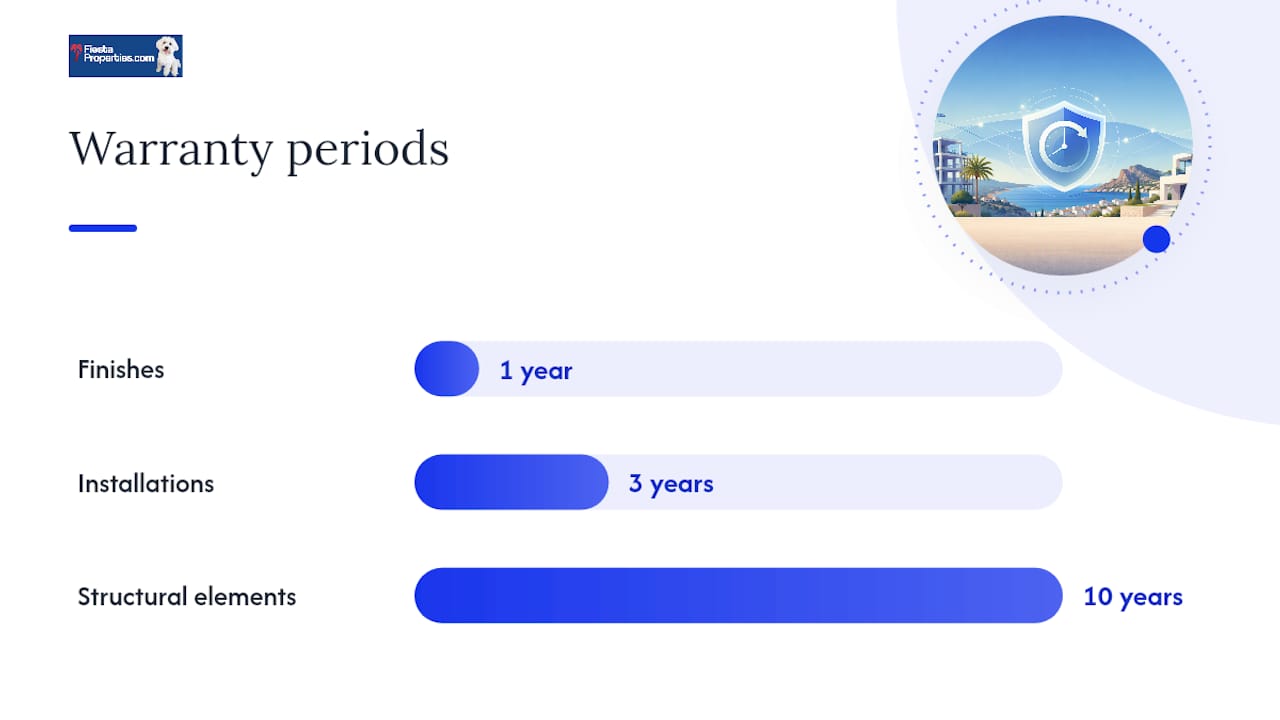
The seguro decenal, a ten-year structural insurance policy covering major defects, following the 1/3/10 warranty scheme (one year for finishes, three years for installations, ten years for structural elements).
-
The licencia de obras (building licence) confirming the works were legally authorised, and the licencia de primera ocupación or cédula de habitabilidad confirming the finished building is fit to occupy and can be legally registered.
Before any staged payment leaves your account, ask for: the individualised guarantee certificate dated to that specific transfer, evidence the funds go into the segregated account, a copy of the licencia de obras, and the nota simple confirming the developer’s registered title to the land.
Pro Tip: Never accept a photocopy or PDF of a guarantee certificate that predates your most recent payment. Guarantees are issued per transfer, so a certificate from six months ago proves nothing about the money you are sending this week.
The purchase timeline and where delays usually creep in
Off-plan purchases in Spain typically run 18 to 36 months from reservation to keys, though the range varies widely by project size and location. The sequence, in order, usually looks like this:
-
Reservation and initial due diligence (days to two weeks).
-
Private contract signature, first substantial payment, and appointment of an independent solicitor (weeks two to six).
-
Construction milestones and staged payments, verified against progress on site (months six through to the final quarter before completion).
-
Practical completion and the first-occupation licence application to the town hall.
-
Snagging inspection, escritura signature, and mortgage drawdown, if applicable.
-
Registration of the new deed at the Land Registry.
Delays cluster around two points: the first-occupation licence, which depends on municipal processing speed and can add months in busy coastal towns, and the final construction stretch, where weather, supply issues, or contractor disputes tend to bite hardest.
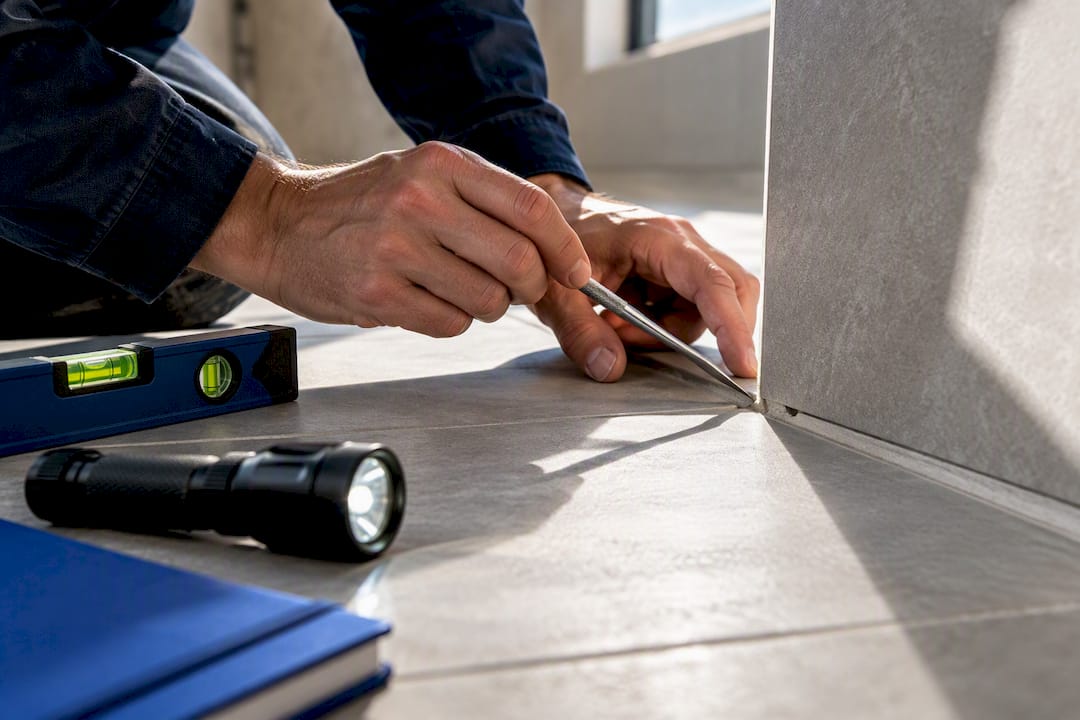
Snagging is the pre-handover inspection where the buyer or a surveyor lists any defects, and a well-run process gives a 30-day remediation window with a retention of 1% to 2% of the price held back until the developer fixes everything on the list. Insist on the right to this inspection before you sign the escritura, not after.
On financing, most lenders will not release mortgage funds until the property is registered as a separate finca, holds its first-occupation licence, and is handed over at the notary. That means the deposit and milestone payments almost always come from your own equity, with the mortgage covering only the final balance.
Taxes, fees and the real cost of buying new
New-build purchases from a developer carry VAT (IVA) at 10%, charged on every staged payment as it falls due, not just on the final balance. This is the key distinction from resale property, which is taxed instead with transfer tax (ITP). On top of IVA, buyers pay stamp duty (AJD), which is set regionally and typically ranges between 0.5% and 1.5% depending on the autonomous community where the property sits.
Beyond the two headline taxes, budget for a cluster of smaller but predictable costs.
| Cost item | Typical range | Notes |
|---|---|---|
| IVA (VAT) | 10% of price | Charged on each staged payment |
| AJD (stamp duty) | 0.5%–1.5% | Set by the autonomous community |
| Notary fees | a small percentage | Scales with property value |
| Land Registry fees | a small scale percentage | Fixed by law, non-negotiable |
| Legal fees | typically around 1% | Varies by firm and scope of work |
| Mortgage arrangement costs | variable | Only if financing is used |
A sensible rule of thumb is to plan for additional taxes and fees roughly in the low teens percent range on top of the purchase price, then set aside a further contingency for the first year of community fees, utility connections and furnishing. Skipping that contingency is one of the more common budgeting mistakes among first-time buyers in Spain.
Financing off-plan and managing currency exposure over a multi-year build
Because most Spanish lenders disburse mortgage funds only at the escritura, the entire construction period has to be funded from your own resources. That single fact reshapes how international buyers should plan a purchase, and it is worth digesting fully before signing anything.
Options for covering the milestone period include:
-
Drawing on savings or liquid investments earmarked for the purchase.
-
Staged bridging finance in your home country, secured against other assets, though this is rarely cheap.
-
Developer-arranged part-finance on some larger projects, though this is the exception rather than the rule.
-
A dedicated contingency of 5% to 10% above the published budget for cost overruns or FX swings.
Currency exposure is the quieter risk. A two or three-year build means multiple large transfers into euros, and exchange rates can move materially over that time. A currency specialist can lock in forward rates for known future payments, smoothing out the swings that a single spot transfer would expose you to.
Pro Tip: If your income and savings sit in sterling or dollars, ask your currency specialist to model the total cost across all four payment stages at today’s rate versus a range of future rates. Seeing the spread in cash terms makes the case for hedging far clearer than a percentage figure ever does.
Before applying for a mortgage, gather your NIE (Spanish tax identification number), the last three to six months of bank statements, recent tax returns, and proof of income. Lenders will typically only issue a binding offer once the property is registered as a separate finca with its licences in place, which is one more reason mortgage negotiations tend to finalise late in the process.
The main risks and how to cut them down in practice
Most off-plan losses in Spain trace back to a handful of repeated failures: a missing or outdated guarantee certificate, developer insolvency partway through the build, licence problems that stall the first-occupation certificate, municipal restrictions on short-term letting that surface after purchase, straightforward completion delays, and FX losses on unhedged transfers.
Each has a direct, practical countermeasure:
-
Demand a fresh individualised guarantee certificate before every single transfer, no exceptions.
-
Use an independent English-speaking solicitor who reports to you, not to the developer or agent.
-
Insist on a specific calendar month for completion in the contract, never a vague quarter or “estimated” date, with delay penalties or automatic rescission built in.
-
Check the town hall’s planning rules and any community statutes on tourist letting before you buy, especially if rental income is part of your plan.
-
Vet the developer directly: ask for a list of past completed projects, evidence of financial standing, and contact with previous buyers where possible.
None of these checks is exotic or expensive. They simply require asking the right question at the right moment, and refusing to move forward until the answer is in writing.
Your pre-signature checklist and the 10 questions worth asking
Before you sign anything or send a single euro, gather and verify: the licencia de obras, the nota simple confirming clear title, the memoria de calidades, the individualised guarantee certificate for each payment, invoices matching the milestone claimed, and written evidence the special account is genuinely segregated.
On the contract itself, insist on:
-
A specific calendar month, not a season or year, as the completion date.
-
A rescission clause allowing a full refund plus statutory interest if completion slips beyond an agreed grace period, commonly around six months.
-
Daily or weekly penalty payments for late delivery that trigger automatically, without requiring a court order.
-
A retention of 1% to 2% of the price held back pending snagging sign-off.
-
Written confirmation of exactly what a delayed guarantee certificate means for your right to withhold payment.
If a guarantee certificate is missing when a payment is due, pause. Do not transfer the money and do not accept verbal reassurance from the agent or developer. That is the moment to call your solicitor, not after the transfer has gone through.
Pro Tip: Keep a simple spreadsheet logging every payment date, amount, and the guarantee certificate number that covers it. If a dispute ever arises, that paper trail is worth far more than memory.
How Fiesta Properties supports international buyers through the off-plan process
A property agency based in Torrevieja has built its service around exactly the friction points described above. The team pre-selects developments across Costa Blanca and Costa Cálida, then hands buyers to specialists for each stage: legal documentation and licences are checked, mortgage applications with lenders are structured, and currency side of multi-stage payments is managed.
That structure matters because off-plan buying rewards continuity. A buyer juggling a separate solicitor, a separate mortgage broker and a separate currency firm has to chase three parties every time a guarantee certificate or a payment deadline needs checking. An integrated team working from the same file tends to catch a missing document faster, simply because everyone involved already has the paperwork in front of them.
What the research actually supports, and where common advice falls short
Most guides to off-plan buying in Spain spend their energy reassuring readers that the law protects them, then move quickly on. That framing understates the real risk, which is not that the protections fail on paper, but that buyers rarely check whether they were issued correctly for their own payment. A blanket guarantee, a certificate that predates the transfer, a special account that turns out not to be segregated: none of that shows up unless someone asks and reads the document.
The conventional advice to “use a solicitor” is correct but incomplete. The more useful instruction is to use a solicitor who will actively refuse to release funds without fresh, individualised paperwork, because a passive solicitor who simply reviews contracts once at the start offers far less protection over a two or three-year build.
If there is one priority above all others, it is this: treat every staged payment as a fresh decision point, not a formality on a pre-agreed schedule. The contract sets the amounts and the timing, but nothing obliges you to send money against an unverified guarantee, and the buyers who avoid trouble are consistently the ones who insist on paperwork before payment, every single time.
— Mike Kalia
Ready to start your off-plan search with a team that checks every document
This agency gives international buyers a coordinated team covering sales, legal checks, mortgage broking and currency exchange, without charging clients separate legal or currency exchange fees. That matters most precisely where this guide has focused, on the staged payments where a missing guarantee certificate or an unfavourable exchange rate can cost real money.

If you are exploring off-plan opportunities across Costa Blanca or Costa Cálida, start by browsing current new build properties in Costa Blanca, or speak to Tim about mortgage pre-approval through the dedicated mortgages page. For a broader look at how the whole purchase unfolds, from reservation to escritura, the buying process guide walks through each stage in order. Book a call or arrange a virtual viewing through the main Fiesta Properties site, and Carlos, Tim and Jamie will pick up from there.
Cancelling an off-plan contract: penalties and refund rights
Cancelling an off-plan contract in Spain works differently depending on who initiates it. If the developer misses the agreed completion date beyond the grace period written into the contract, typically around six months, the buyer can usually invoke rescission and claim a full refund of everything paid, plus statutory interest, without needing to go through court first if the clause was drafted correctly.
If the buyer wants to walk away without cause, the outcome depends entirely on what the private contract says. Many contracts allow the developer to retain the reservation deposit and a portion of subsequent payments as compensation, since the developer has already committed resources based on your reservation. Some contracts specify a fixed percentage penalty, others leave it open to negotiation, which is exactly why reviewing this clause before signing matters more than most buyers realise.
Where the developer becomes insolvent or the project is abandoned, the individualised bank guarantee or seguro de caución becomes the buyer’s main route to recovering money, since it exists specifically to cover this scenario. This is the practical reason the guarantee certificate discussion earlier in this guide is not a bureaucratic footnote. It is the mechanism that determines whether a cancelled purchase means an inconvenience or a genuine financial loss.
Brexit and considerations for non-EU buyers
Brexit changed the administrative path for British buyers without closing it. UK nationals can still buy off-plan property in Spain freely, but they now buy as non-EU citizens, which affects visa-free stay limits, residency planning, and in some cases mortgage terms offered by Spanish lenders.
The Schengen 90-day rule now applies to UK visitors, meaning buyers who plan to spend extended periods in their new Spanish home without formal residency need to plan visits carefully around that limit. Buyers intending to live in Spain full time typically look at a residency route such as the Non-Lucrative Visa or, for those investing above certain thresholds, other residency-linked options, though the details and qualifying amounts change periodically and are worth checking with a solicitor rather than an agent.
For non-EU buyers generally, including those from outside the UK, the property purchase process itself does not differ from that available to EU citizens; Spain places no nationality restriction on buying residential property. Where non-EU buyers sometimes see different treatment is in mortgage terms, since some lenders apply slightly lower loan-to-value ratios or request additional documentation for applicants without EU residency. None of this changes the core off-plan protections: the LOE, the guarantee requirements and the tax rules apply identically regardless of the buyer’s nationality.
Can you resell an off-plan property before it completes?
Reselling an off-plan property before completion, sometimes called assigning the contract, is possible in principle but restricted in practice. Most Spanish developer contracts either prohibit assignment outright or require the developer’s written consent, often alongside an administrative fee for processing the change of buyer.
Where assignment is permitted, the seller typically transfers their rights and obligations under the original contract to the new buyer, who then takes over the remaining payment schedule. The original buyer usually recovers what they have paid so far, plus whatever premium the market will bear if the property’s value has risen since reservation, though that premium is far from guaranteed and depends heavily on market conditions at the time of resale.
The practical friction is significant. Buyers considering an off-plan purchase partly as a short-term flip should check the assignment clause in the contract before signing, not after, since a prohibition on assignment can trap capital until completion regardless of changed circumstances. Some market reports note that certain buoyant coastal projects have seen appreciation in the range of 20% to 30% between contract and completion, though this figure is an illustrative estimate from specific projects and cycles, not a guaranteed outcome, and varies enormously by location, developer, and market timing.
The escritura de compraventa: the final deed and why it matters
The escritura de compraventa is the formal deed of sale signed before a Spanish notary, and it is the single moment that legally transfers ownership from developer to buyer. Everything before this point, the reservation, the private contract, the staged payments, is preparatory. The escritura is where the property actually becomes yours in the eyes of Spanish law.
At the signing, the notary verifies the developer’s title, confirms the first-occupation licence is in place, checks that all agreed payments have been made, and reads through the deed’s terms with both parties present. The buyer pays the remaining balance at this point, typically the largest single payment of the entire process, and this is also when mortgage funds, if used, are drawn down and handed directly to the developer.
Once signed, the escritura must be registered at the Land Registry (Registro de la Propiedad), which is what makes the ownership change enforceable against third parties and protects the buyer if any dispute arises later. Registration typically takes a few weeks after signing, and until it completes, the buyer’s ownership, while valid between the parties, is not yet fully protected against competing claims. This is why solicitors treat registration, not just signature, as the true end point of a safe off-plan purchase.
FAQ
Is off-plan property a good investment in Spain?
Off-plan property can offer a lower entry price than a comparable finished new build, and some coastal projects have seen appreciation of 20% to 30% between contract and completion during buoyant cycles. That outcome is an estimate tied to specific locations and market timing, not a guarantee, so the investment case depends heavily on verifying the legal protections and choosing a well-located project.
Is it wise to buy a property in Spain right now?
Buying now can work well if you enforce the statutory protections, budget the full 12% to 15% of extra taxes and fees on top of the price, and use an independent solicitor rather than relying on the developer’s paperwork alone. Market conditions vary significantly by region, so comparing specific areas such as Costa Blanca South matters more than any single national verdict.
Is it possible to live off-grid in Spain?
Living off-grid is legal in parts of rural Spain, but it sits outside the scope of a standard off-plan new-build purchase, which is connected to mains utilities and requires a first-occupation licence to be legally habitable. Anyone drawn to that lifestyle should look at rural land purchase rules separately rather than an off-plan apartment or villa development.
What must I insist on before making any staged payment?
Insist on an individualised bank guarantee or seguro de caución certificate dated to that specific payment, confirming the funds go into the developer’s segregated special account. Buyers have the legal right to withhold payment if that certificate is not produced first.
Does Fiesta Properties charge fees for legal or currency services?
This agency does not charge legal fees or currency exchange fees to clients buying through its integrated service. Pricing for property purchases themselves is set by individual developments and listed on the Fiesta Properties site.


