

Living in Cartagena, Spain: what British expats need to know
· 14 min read

Cartagena suits British expats and retirees who want a year-round Mediterranean city with genuine local services rather than a seasonal resort feel. Housing and daily costs tend to sit below those of the nearby Costa Blanca resorts, and the city offers solid healthcare and transport links. The sections below cover residency, healthcare and buying so you can plan the move with confidence.
TL;DR:
- Cartagena offers more affordable housing and living costs than popular Costa Blanca resorts, with seaside homes on inland or nearby towns often being cheaper.
- UK nationals must register on the padrón, apply for a TIE, and arrange healthcare coverage, often requiring private insurance until they qualify for Spanish state healthcare.
- Property buyers need an NIE before signing contracts, expect extra costs of about 10 to 12%, and should conduct legal checks to avoid delays caused by incomplete land registry records.
- Moving and working legally in Cartagena typically require a work permit, residence visa, or non-lucrative visa, with remote work options available under Spain’s digital nomad visa.
- Daily life benefits include year-round public services, a slower pace with local festivals, and Spanish language skills greatly aiding administrative and social integration.
Table of Contents
- Snapshot: location, scale and daily life in Cartagena
- Cost of living and housing: rent and buying ranges, monthly budgets
- Residency, paperwork and healthcare: what UK nationals must do to live legally
- Where to live in and around Cartagena: neighbourhoods and nearby towns
- Buying essentials for UK buyers: NIE, extra costs, timeline and red flags
- Employment opportunities and work permits for non-EU nationals
- Cultural and language considerations for expats living in Cartagena
- Education options (international schools, universities) for families
- Shopping, groceries, and local markets overview
- Social life, community groups, and expat clubs in Cartagena
- Safety and security considerations
- First-hand perspective: how Fiesta Properties helps British buyers in the Costa Cálida
- How Fiesta Properties can help you move to Cartagena
- FAQ
- Sources
Snapshot: location, scale and daily life in Cartagena
Cartagena is a working naval port and university city on Spain’s south-eastern coast, in the Murcia region, with a population of around two hundred thousand, according to Wikipedia. That scale matters: it means the city runs on its own economy and public services throughout the year, rather than filling and emptying with the tourist season the way many coastal resorts do.
For residents, that translates into practical day-to-day benefits:
- Full-service hospitals, a university presence and established public transport, all operating year-round rather than seasonally.
- A historic centre with Roman and naval heritage, giving the city a cultural identity beyond its beaches.
- A Mediterranean climate with long dry summers, mild winters and generous sunshine hours, which shapes a slower, outdoor-oriented pace of life.
The result is a city that functions like a proper regional capital with beaches attached, rather than a beach resort with a town centre bolted on.
Cost of living and housing: rent and buying ranges, monthly budgets
Housing costs in Cartagena and the wider Murcia region tend to run below equivalent properties on the Costa Blanca, which is one of the main draws for budget-conscious retirees and families.
Murcia’s housing market has shown notable annual price growth alongside wide variation between municipalities and neighbourhoods, according to INE regional data. That means a seafront apartment in a sought-after part of the city can carry a premium, while comparable homes a short drive inland, or in nearby towns such as Los Alcázares or San Javier, often come in noticeably cheaper. Our Murcia property market review breaks down how these regional shifts play out across different towns.
A few practical pointers for budgeting:
- Coastal and historic-centre apartments generally command higher rents and purchase prices than inland or suburban areas.
- Villas and townhouses on the outskirts or in nearby towns like Los Alcázares tend to offer more space for less outlay than central Cartagena.
- Day-to-day costs (groceries, utilities, local transport) are generally modest for a Spanish regional city, though they vary with lifestyle and household size.
When budgeting a move, it helps to sketch a monthly figure in euros covering rent or mortgage, utilities, groceries, local transport and any private insurance premium, then build in a margin for the exchange rate. Since you’ll be converting pounds to euros regularly, particularly during the purchase itself, using a currency specialist rather than a standard bank transfer can make a meaningful difference to what actually lands in your Spanish account.
Residency, paperwork and healthcare: what UK nationals must do to live legally
British citizens planning to stay in Spain for more than three months must register as residents and obtain a TIE (Tarjeta de Identidad de Extranjero), according to Gov. Alongside this, registering on the padrón municipal, the local town hall register, is essential: it underpins access to healthcare, school enrolment and other local services, and it’s worth doing as soon as you have a confirmed address.
The practical sequence typically looks like this:
- Register on the padrón municipal at your local town hall using proof of address.
- Apply for residency and the TIE, which requires proof of means, health cover and the padrón certificate.
- Arrange healthcare access, which depends on your situation.
On healthcare, GOV.UK sets out the main routes for UK nationals: access through employment and social security contributions, registering an S1 if you receive a UK State Pension, gaining permanent residency after five years, or paying into the Convenio Especial, a state scheme open to registered residents, according to GOV.UK. A GHIC covers temporary visits but is not a substitute for registered healthcare once you live in Spain full time, so most new residents arrange private insurance to bridge any gap before their chosen route takes effect.
Pro Tip: Start the padrón and TIE paperwork in the same visit to the town hall where possible, since many later applications, including healthcare registration, ask for both documents.
Where to live in and around Cartagena: neighbourhoods and nearby towns
Cartagena’s historic centre suits buyers who want walkability, cafés, museums and the naval quarter on their doorstep, with everyday services within easy reach on foot. The port and coastal neighbourhoods, including areas close to Cala Cortina beach, appeal to those who want sea views and beach access without leaving the city boundary. For retirees prioritising value and a quieter pace, towns just outside Cartagena, such as Los Alcázares or La Manga’s calmer stretches, offer more space for the money and a slower rhythm of life.
Whichever area you shortlist, it’s worth checking:
- Proximity to a hospital or health centre, since Cartagena’s main hospital serves the wider district.
- Access to a reasonably sized supermarket and local market for everyday shopping.
- Bus or rail links into the city centre if you choose to live outside it.
Murcia Region’s San Javier airport sits around 30 minutes from Cartagena, with Alicante airport a further option roughly 90 minutes north, both well connected to UK regional airports. Our guide to Murcia property covers these areas in more depth if you’re narrowing down a shortlist.
Buying essentials for UK buyers: NIE, extra costs, timeline and red flags
Before you can sign anything, you need a Número de Identificación de Extranjero (NIE). It’s required to open a Spanish bank account, contract utilities and ultimately sign the title deed, so applying early avoids delays later in the process, according to ImmigrationSpain.
A practical buying sequence runs roughly as follows:
- Apply for your NIE and open a Spanish bank account before making an offer.
- Instruct an independent lawyer to carry out land registry and planning checks on the property.
- Sign a reservation or deposit contract, then proceed to the notary for completion.
- Budget for extra costs of around 10 to 12% on top of the purchase price to cover taxes, notary and registration fees, as recommended by Costaluz Lawyers.
Common delays stem from incomplete land registry records or outstanding debts on the property, which is exactly why an independent legal check before signing matters. Our step-by-step buying guide walks through the full process in order.
Pro Tip: Open your Spanish bank account before you need it, since most utility contracts and the NIE application itself move faster once you have one in place.
Employment opportunities and work permits for non-EU nationals
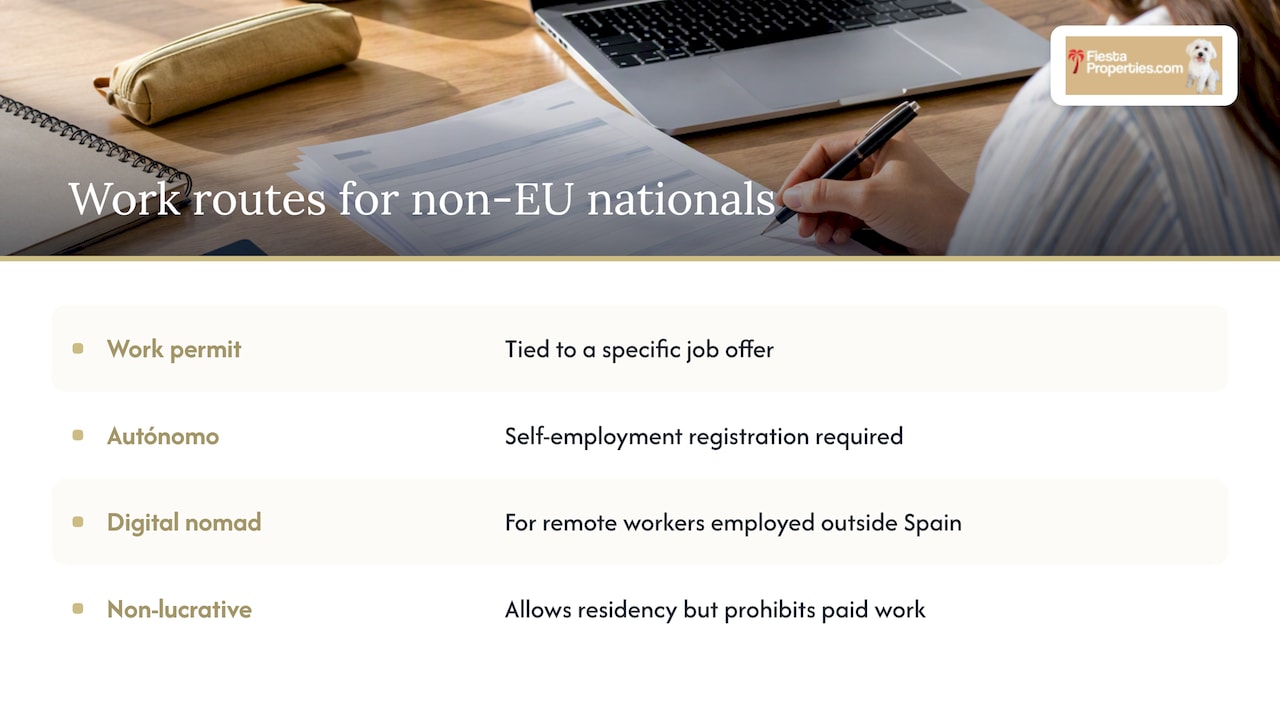
Since Brexit, British nationals are treated as non-EU citizens for employment purposes in Spain, which means working legally generally requires a work permit tied to a specific job offer, a self-employment (autónomo) registration, or a non-lucrative visa if you intend to live on pension or savings rather than local income. A non-lucrative visa route does not permit paid work in Spain, which trips up some retirees who later take on freelance or remote projects without checking their visa conditions first.
Cartagena’s economy centres on its port, naval industry, petrochemical sector and growing tourism and services base, but opportunities for non-Spanish-speaking newcomers tend to concentrate in teaching English, tourism-related roles, or remote work for UK or international employers. Spain does offer a digital nomad visa for non-EU remote workers employed by companies outside Spain, which has become a realistic route for younger expats who want to combine Cartagena living with continuing UK or international employment.
For retirees who plan not to work, this section may be less relevant, but anyone considering part-time consultancy, teaching or freelance work after moving should establish their visa category before accepting any paid work, since switching from a non-lucrative visa to a work-permitted status involves a separate application. Spanish bureaucracy around permisos de trabajo can move slowly, so starting enquiries months ahead of any planned work is sensible, and specialist immigration advice is worth the cost given how category-specific the rules are.
Cultural and language considerations for expats living in Cartagena
Cartagena is a Spanish-speaking city first and a tourist destination second, which shapes daily life differently from the more anglicised stretches of the Costa Blanca. Shopkeepers, town hall staff and healthcare receptionists are far more likely to speak only Spanish here than in heavily British-populated resort towns, so a working grasp of everyday Spanish makes administrative tasks, medical appointments and simple errands considerably smoother.
Murcian Spanish carries a distinctive regional accent and some local vocabulary, which can take a little adjustment even for those who studied Spanish in the UK. Many expats find that joining a local language exchange or enrolling in a beginners’ course within the first few months pays off quickly, both practically and socially.
Culturally, Cartagena keeps traditional Spanish rhythms: a later lunch, an evening paseo along the port, and a strong local calendar of festivals, including its well-known Holy Week processions and the annual Carthaginians and Romans festival. These events are genuinely local rather than staged for visitors, and taking part is one of the fastest ways to feel part of the community rather than observing it from the outside. Shops and offices often close for a midday break, a habit that surprises newcomers used to continuous UK trading hours, so planning errands around local timings avoids frustration.
Education options (international schools, universities) for families
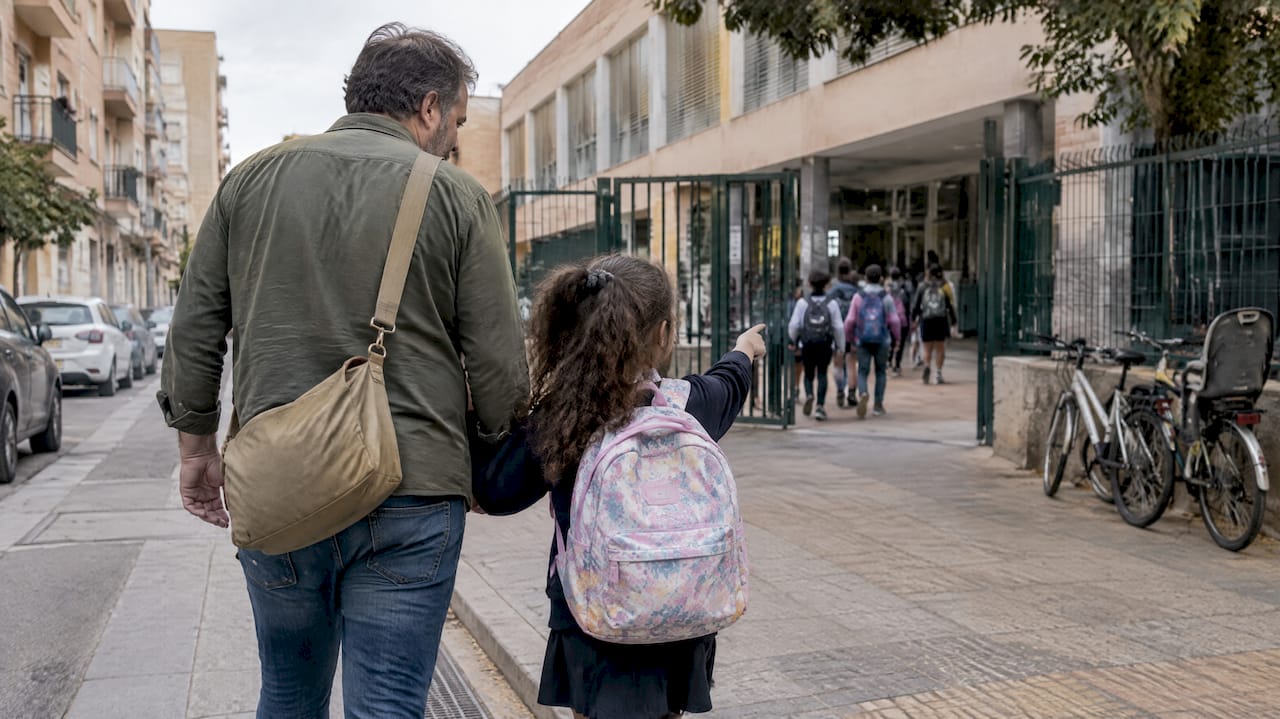
Families relocating with children have a mix of options in and around Cartagena. State schools are free and widely available, teach in Spanish, and offer the fastest route to genuine integration and fluency for younger children in particular. Concertado (semi-private, state-subsidised) schools are also common across the region and often combine smaller class sizes with partial public funding.
Fully international or British curriculum schools are less concentrated in Cartagena itself than around Murcia city or the Costa Blanca resorts further north, so families who want an English-medium education for older children sometimes factor in a longer school run or consider settling slightly further afield. It’s worth visiting prospective schools and asking directly about English-language support programmes, since provision varies considerably between state schools even within the same municipality.
For higher education, Cartagena is home to the Universidad Politécnica de Cartagena, a technical university with a solid regional reputation, particularly in engineering and maritime studies, which also brings a steady student population that keeps the city’s social and cultural life active outside the main tourist season.
Shopping, groceries, and local markets overview
Everyday shopping in Cartagena follows a familiar pattern for anyone used to Spanish towns and cities, with large supermarket chains covering the basics and smaller independent shops and markets filling in fresh produce, fish and local specialities. Weekly outdoor markets remain a central part of local life, selling fruit, vegetables, cheese, cured meats and household goods, often at lower prices than supermarket equivalents.
The covered Mercado de Santa Florentina and similar municipal markets give a genuine sense of local food culture, with vendors who know their regular customers, something that many British expats mention as one of the more rewarding small adjustments to daily routine. For anything less commonplace, larger retail parks and shopping centres on the city’s outskirts stock a broader range of household and electronic goods, closer to what UK shoppers expect from an out-of-town retail area.
Specialist British or international grocery items are less widely available in Cartagena than in the bigger expat hubs of the Costa Blanca, so those who rely on particular UK brands may need to stock up during visits home or order online. Most newcomers find that the adjustment to Spanish brands and produce happens faster than expected, and the quality and price of fresh fish, fruit and vegetables is frequently better than what they left behind.
Social life, community groups, and expat clubs in Cartagena
Cartagena has a smaller established British community than the major Costa Blanca resorts, which shapes its social scene differently: expats here tend to integrate more closely with Spanish neighbours and local associations rather than relying on a large parallel English-speaking network. That suits retirees and families who want a genuine Spanish lifestyle rather than a British enclave abroad.
That said, international and expat groups do exist, often centred around shared interests such as walking, sailing, bridge or language exchange, and these tend to meet in cafés, community centres or sailing clubs along the coast. Social media groups focused on Cartagena and the wider Mar Menor area are a practical starting point for finding meet-ups, recommendations for tradespeople, and advice from others who have already navigated the residency and healthcare process.
Local fiestas, markets and the university’s student population also provide natural opportunities to meet people, and taking part in Spanish classes or volunteering locally tends to build a wider circle faster than relying solely on expat-specific groups. For those who prefer a larger, ready-made British social network from day one, towns further north on the Costa Blanca may offer a more immediate fit, but many who choose Cartagena specifically value the slower, more locally rooted pace that comes with a smaller expat footprint.
Safety and security considerations
Cartagena is generally considered a safe city by Spanish and wider European standards, with the kind of low-level precautions that apply in most mid-sized cities: keeping valuables out of sight in busy tourist areas, using registered taxis or ride-hailing apps late at night, and securing holiday homes properly when left empty for extended periods. As with any coastal area, opportunistic theft from parked cars or unattended beach belongings is the most commonly reported issue rather than serious crime.
For retirees and families, the presence of year-round hospitals, an active police presence linked to the naval base, and a settled residential population rather than a purely seasonal one tend to contribute to a steadier sense of community safety compared with resort towns that empty out each winter. Home insurance that covers both contents and any period the property stands empty is worth arranging promptly after purchase, particularly for those who plan to split their time between the UK and Spain rather than relocating full time.
First-hand perspective: how Fiesta Properties helps British buyers in the Costa Cálida
We have guided many international buyers through the Spanish property process, including in Cartagena and the wider Mar Menor area. Our approach pairs virtual viewings and documentation support with specialists covering sales, mortgages, legal checks and currency exchange, helping UK buyers progress from enquiry to completion. For most clients, that joined-up support shortens the process and reduces the small administrative errors that otherwise cause delays.
— Mike Kalia
How Fiesta Properties can help you move to Cartagena
Moving to Cartagena involves more moving parts than most house moves back home, and having one team coordinate the search, the legal checks and the currency transfer tends to save both time and stress. We do not charge legal fees or currency exchange fees to clients, helping keep the cost of support transparent.

Our team can support you with:
- Property search and shortlisting.
- In-person and virtual viewings with bilingual negotiation support.
- Independent legal checks.
- Mortgage guidance and currency exchange assistance.
If you’re ready to see what’s available, browse current property for sale in Cartagena or get in touch through our main services page to arrange a conversation about your move.
FAQ
Is Cartagena, Spain a good place to live?
Cartagena suits people who want a year-round working city with genuine local services, history and lower housing costs than nearby resort areas, rather than a purely seasonal beach town. It particularly appeals to retirees and families who prioritise affordability and authenticity over an English-speaking enclave.
Can a British citizen live in Spain permanently?
Yes, but British citizens must register as residents and obtain a TIE if staying more than three months, following the process set out by GOV.UK. Permanent residency and eventual long-term status build on this initial registration over time, and MNS Solicitors sets out the further steps toward naturalisation for those considering that route.
What Spanish town is paying Brits to move there?
We’re not aware of any town in the Cartagena area or wider Murcia region currently paying British nationals to relocate. Schemes of that kind have occasionally appeared in other parts of Spain, but they are not a feature of the Costa Cálida property market.
Where do most UK expats live in Spain?
The largest concentrations of UK expats are traditionally found along the Costa Blanca and Costa del Sol, though Murcia’s Costa Cálida, including areas around Cartagena and the Mar Menor, has become an increasingly popular choice for buyers seeking value. Cartagena itself has a smaller, more locally integrated British community than the major resort towns.
Do UK nationals need private health insurance in Cartagena?
It depends on your situation: access to Spanish state healthcare for UK nationals typically comes through employment, an S1 registration, five years of permanent residency, or the Convenio Especial scheme, according to GOV.UK. Many new residents arrange private insurance to cover any gap before one of these routes takes effect.


