





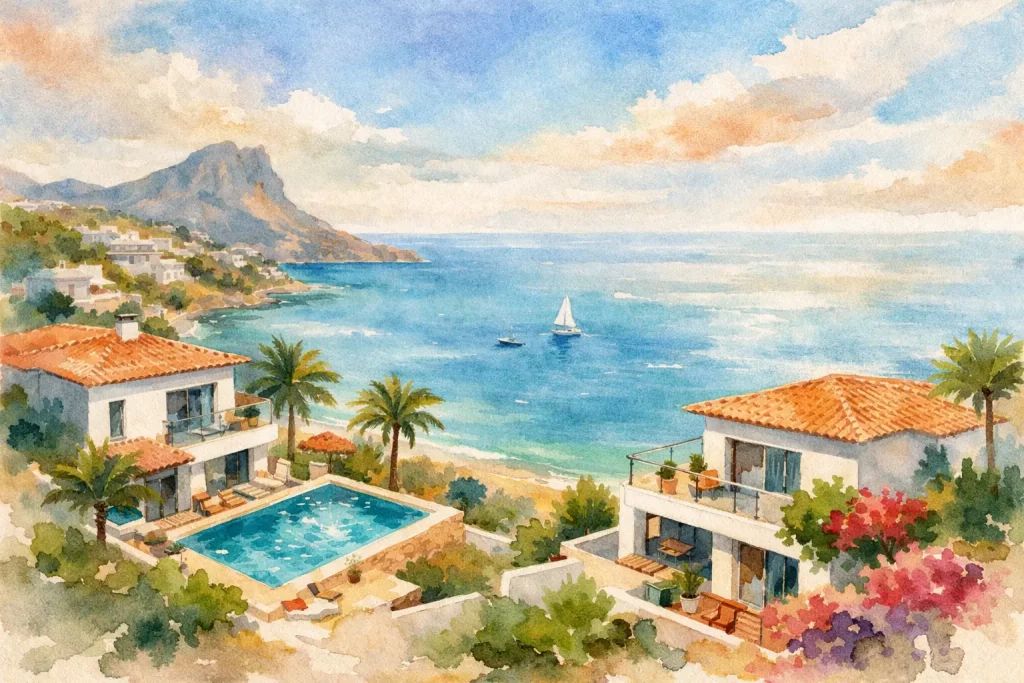
The view from a show home terrace can make the decision feel simple. Yet when buying new homes Costa Blanca, the details behind that view matter just as much: the exact plot position, completion date, community charges, local facilities and the costs payable before you receive the keys. A well-chosen new property can offer low maintenance, modern design and a straightforward route into Mediterranean living. The right purchase starts with asking sharper questions than ‘How close is the beach?’
Why new homes on the Costa Blanca appeal to overseas buyers
Costa Blanca offers a broad choice of locations, from established coastal towns and golf communities to quieter inland villages with more space for your budget. New developments are designed around the way many international buyers want to live: open-plan interiors, private terraces, communal pools, efficient air conditioning and, in many cases, secure parking or storage.
For a holiday-home buyer, a lock-up-and-leave flat can reduce maintenance concerns while keeping the sea, restaurants and airport connections within easy reach. Families relocating to Spain may place greater value on bedrooms, school access, year-round services and outdoor space. Investors often look at rental appeal, proximity to the coast and the quality of the development as a whole.
The key advantage is choice. New homes range from compact flats and ground-floor bungalows to townhouses and detached villas, with Costa Blanca North, Costa Blanca South and nearby Murcia each offering a different balance of landscape, lifestyle and price. There is no single ‘best’ area. It depends on how often you will use the property, whether you intend to live there all year and what daily life needs to look like.
Choose the location before the property type
A two-bedroom home can feel entirely different depending on where it sits. Before focusing on finishes or furniture packs, narrow your search by the setting that suits you.
Costa Blanca North is often chosen for its dramatic coastline, established international communities, marinas and hillside views. Areas around Jávea, Moraira, Calpe and Altea tend to appeal to buyers seeking character, scenery and a more mature coastal atmosphere. Availability of central new developments can be tighter, so buyers may need to be flexible on distance from the beach or consider surrounding residential areas.
Costa Blanca South is known for its flatter terrain, sandy beaches, golf, strong year-round amenities and a wide selection of modern schemes. Orihuela Costa, Torrevieja, Guardamar del Segura and the areas around Ciudad Quesada offer different lifestyles within relatively short driving distances. This part of the coast can work particularly well for buyers who want a practical holiday base with supermarkets, healthcare, restaurants and airports close by.
Murcia offers another compelling option, especially for buyers prioritising newer resort-style communities, golf or more internal space. It may be less suitable if your priority is being able to walk to a busy promenade every evening. That trade-off should be clear before you reserve.
When viewing, test the location rather than just the property. Drive the route from the airport, visit at the time you would normally use local restaurants, and check what remains open outside peak summer. A sea view is valuable, but easy access to the services you use every week can matter more over time.
Understand the difference between off-plan and key-ready
New homes Costa Blanca buyers will generally encounter two purchase stages: off-plan homes, where construction is underway or due to begin, and key-ready homes that are complete or close to completion.
An off-plan purchase can give you the widest choice of plots, orientations and layouts. In some developments, it may also allow choices around finishes or optional extras, subject to the developer’s schedule. The compromise is time. You need to be comfortable with the stated completion window, the payment schedule and the possibility that construction timing changes.
A key-ready home gives greater certainty. You can inspect the actual property, assess light levels and views, and understand the finished community before committing. It may be the better route if you need to use the home soon or do not want to wait for construction. The selection of units, however, may be more limited, particularly for the most desirable terraces, corner plots or top-floor positions.
Neither option is automatically better. Buyers who are planning a move in a year or two may welcome the flexibility of off-plan. Those arranging an imminent relocation or seeking a holiday property for the coming season will often prefer a completed home.
Ask what is included in the advertised price
A polished show home can include upgrades that are not part of the standard specification. Request the full specification in writing and check the detail, not just the headline features. Confirm the kitchen appliances, air conditioning system, bathroom fittings, lighting, wardrobes, parking, storage and landscaping included with your chosen unit.
If a private pool, solarium, basement or furniture package is offered as an extra, establish the price and whether it is essential to the way you intend to use the property. Also ask about orientation, plot boundaries and planned building on neighbouring land. A model plan is useful, but the official plans and contract documents are what count.
Budget for the full purchase, not just the list price
The advertised price is the starting point. For a new property in Spain, buyers should also allow for taxes and professional costs. New homes are normally subject to IVA, with the rate depending on the property type, plus stamp duty known as AJD. Legal fees, notary fees and Land Registry fees should also be included in your budget.
The exact figures and applicable rates can change, and they may differ by region. Obtain current, independent legal and tax advice before reserving a property. If you are financing the purchase, speak with a mortgage specialist early. Your available deposit, income position and the lending valuation can all affect what is achievable.
Then consider ownership costs after completion. Community fees contribute to shared facilities such as pools, gardens, lifts, security and cleaning. Larger resort developments may offer more amenities, but their ongoing charges can be higher. Check the projected annual IBI property tax, utility standing charges, insurance and any non-resident tax obligations alongside the community budget.
A lower purchase price does not always mean lower ownership costs. Equally, higher community fees can be worthwhile if they maintain facilities you will genuinely use. The important point is to compare like with like.
Protect your position during the buying process
Buying abroad should feel exciting, but it should never rely on assumptions. Before paying a reservation fee, ensure you understand the reservation terms, whether the amount is refundable in specific circumstances and the deadline for signing the next contract.
For an off-plan property, independent legal representation is particularly important. Your lawyer should review the contracts, confirm the developer’s legal position, check planning and building documentation, and verify that stage payments are properly protected where required. Keep copies of every payment receipt, signed plan and specification agreed during the purchase.
It is also sensible to establish who will manage practical tasks if you are not in Spain. This can include arranging your NIE number, opening a bank account where needed, setting up utilities, obtaining insurance and attending the completion appointment through a legally valid power of attorney if appropriate. Fiesta Properties can help buyers coordinate the property search and the wider purchase journey, so the process is clear from first viewing to handover.
Think beyond the handover day
A new property should be inspected carefully before completion. Create a snagging list for any incomplete work, cosmetic defects or items that do not match the specification. This is normal on a new build and is best handled methodically, with photographs and written records.
Ask about construction warranties, appliance guarantees and the procedure for reporting issues after you move in. Check how keys, remotes, pool access and community information will be handed over. If you plan to rent the property, investigate the local rules and licensing requirements before making income projections, as regulations can vary by municipality and region.
Finally, consider the home in February as well as August. Does it have efficient heating and cooling? Is the terrace usable in winter? Are shops, healthcare and transport convenient when tourist numbers are lower? These questions often separate a pleasant holiday purchase from a property that works brilliantly for years.
The strongest choice is rarely the first home with the biggest terrace or the flashiest pool. It is the one that matches your timeframe, budget and preferred way of living – with every cost, document and practical detail understood before you commit.