





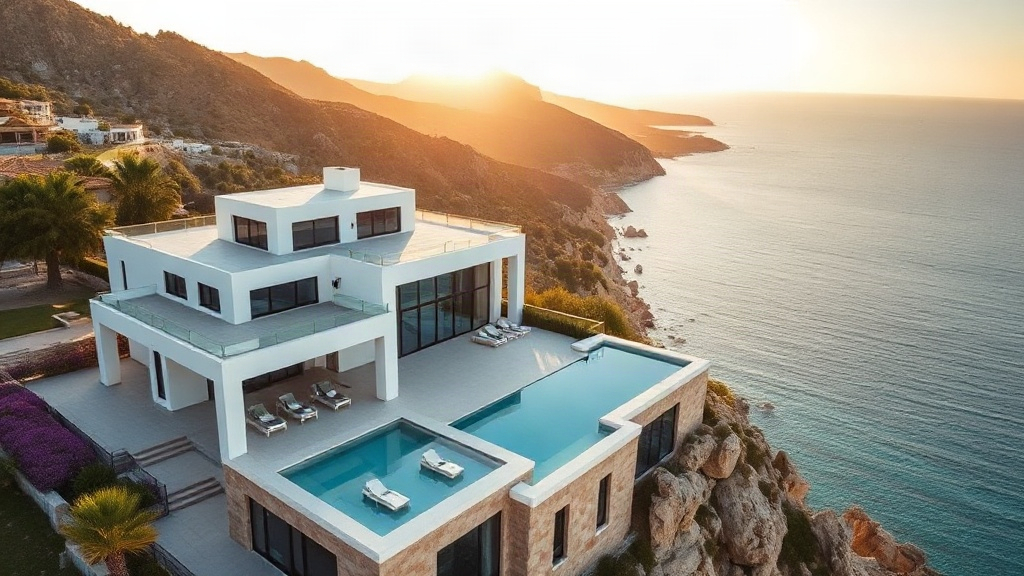
While the southern stretch of the Costa Blanca has long dominated conversations around Spanish property investment, a quieter transformation is taking place further north. From Denia to Calpe, luxury new builds Costa Blanca North are emerging as a compelling alternative for investors seeking higher returns, authentic Mediterranean living, and properties that stand apart from the mass-market developments saturating other coastal regions.
The question isn’t whether this stretch of coastline will catch up with its southern neighbour. It’s whether investors recognise the opportunity before the market fully matures.
The Appeal Beyond the Tourist Trail
Costa Blanca North operates on a different frequency to the south. Towns like Altea, Moraira, and Javea have maintained their Spanish character while attracting an affluent international community that values quality over quantity. This balance creates a rental market willing to pay premium rates for properties that deliver genuine lifestyle appeal rather than generic holiday accommodation.
New developments here reflect this demographic shift. Architects are designing for year-round living, not just summer lettings. Expect larger plots, considered orientations that maximise natural light, outdoor spaces that function as genuine extensions of the living area, and specifications that acknowledge buyers expect substance alongside style.
The infrastructure supports this evolution. Alicante Airport provides year-round connectivity to major European cities, while the AP-7 motorway creates easy access to Valencia in under an hour. Unlike some coastal regions where luxury exists in isolation, properties here benefit from established services, international schools, healthcare facilities, and a cultural calendar that extends well beyond the summer months.
Why Developers Are Looking North
Land availability in Costa Blanca South has become increasingly constrained. Orihuela Costa, Torrevieja, and surrounding areas have seen decades of intensive development, leaving limited opportunities for projects that offer genuine differentiation. Prices have responded accordingly, compressing margins for developers and reducing value for buyers.
The northern coastline presents an entirely different proposition. Stricter planning regulations have historically limited development, creating scarcity that now works in favour of quality projects. When plots do become available, they tend to offer better topography, elevated positions with unobstructed views, and proximity to coastline that remains largely unspoiled.
This scarcity attracts a different calibre of developer. Rather than volume builders focused on delivering the maximum number of units, the market here favours boutique developers with track records in high-specification properties. The result is a pipeline of luxury new builds that compete on quality rather than price, appealing to investors who understand that premium properties attract premium tenants.
Investment Fundamentals That Work
Rental yields in Costa Blanca North outperform many comparable Mediterranean markets. Properties in sought-after locations regularly achieve annual returns of 5-7% through a combination of long-term lets and selective short-term rentals during peak season. This performance reflects genuine demand rather than speculative pricing.
The rental demographic skews towards professionals, retirees with disposal income, and families seeking extended stays rather than week-long holidays. These tenants pay higher rates, treat properties with more care, and generate income across a longer season. In towns like Javea and Moraira, the rental calendar now extends from March through November, with winter lets becoming increasingly common as remote working normalises.
Capital appreciation follows a steadier trajectory than the boom-bust cycles that characterise more speculative markets. Year-on-year growth of 4-6% reflects sustainable demand and limited supply rather than artificial inflation. For investors seeking both income and long-term value protection, this combination delivers.
What Defines Luxury in This Market
The term ‘luxury’ is applied loosely across Spanish property marketing, but in Costa Blanca North, certain benchmarks separate genuine high-end developments from aspirational mid-market projects.
Plot sizes matter. Developments offering 500-800 square metre plots create privacy and space that cannot be replicated in denser schemes. This land allocation allows for meaningful outdoor areas, private pools that aren’t overlooked, and landscaping that matures into a genuine asset.
Construction quality extends beyond aesthetics. Underfloor heating throughout, ducted air conditioning with zone control, double-height ceilings in living areas, and floor-to-ceiling glazing are standard in true luxury specifications. Kitchens feature integrated appliances from recognised brands, not budget alternatives dressed up with expensive fascias.
Sustainability credentials increasingly influence buyer decisions. Solar panels, aerothermal heating systems, greywater recycling, and high-performance insulation reduce running costs while appealing to environmentally conscious tenants and buyers. Properties delivering A or B energy ratings command rental premiums and sell faster when the time comes to exit.
Locations Within Locations
Not all Costa Blanca North addresses deliver equal investment potential. Certain pockets have established themselves as consistently strong performers.
The hills above Altea attract buyers seeking views and tranquillity without isolation. New villas here benefit from proximity to Altea’s old town, the Don Cayo Golf Club, and several Michelin-recognised restaurants. Rental demand comes primarily from long-term tenants, reducing void periods and management intensity.
Moraira’s limited development capacity creates natural scarcity. The town maintains strict architectural guidelines that preserve character while allowing contemporary design. Properties within walking distance of the town centre or established beaches like L’Ampolla achieve premium pricing in both sales and rental markets.
Cumbre del Sol, while technically a private urbanisation, functions as a self-contained luxury community between Javea and Moraira. New phases here target international buyers specifically, with marketing efforts focused on Northern European markets where demand for Spanish coastal property remains strong.
The Purchase Process for New Builds
Acquiring a new construction property in Spain follows different procedures to resale purchases. Deposits typically release in stages tied to construction milestones, protecting buyers while funding development. Bank guarantees should cover all payments until completion, providing recourse if projects fail to deliver.
Investors should factor in the full cost beyond the headline price. Transfer tax on new builds sits at 10% in Valencia, alongside notary fees, land registry costs, and legal representation. Budgeting 12-13% above the purchase price covers these essentials. Understanding the new build purchase process before committing prevents surprises during the transaction.
Completion timelines vary by project scale and developer capability. Realistic expectations range from 12-18 months for villas to 24 months for larger developments. Delays occur, but reputable developers communicate proactively and adjust schedules rather than overpromise delivery dates.
Market Timing and Forward Planning
Property investment rewards those who identify emerging markets before they reach saturation. Costa Blanca North exhibits several indicators that suggest the current window offers better value than waiting for further validation.
Development activity is accelerating but hasn’t reached the intensity that typically signals market maturity. Major sales platforms show 30-40% fewer listings here than in Costa Blanca South, despite comparable coastline length and similar infrastructure. This imbalance won’t persist indefinitely.
Buyer demographics are shifting. Five years ago, northern Costa Blanca primarily attracted Spanish buyers and a mature European demographic. Recent sales data shows increasing interest from younger international buyers, particularly from professional backgrounds with location flexibility. This broadening base reduces market vulnerability to demographic shifts or economic changes in any single source country.
Infrastructure investment continues. The N-332 coastal road sees ongoing improvements, the AP-7 motorway now offers free access following toll removal, and fibre-optic broadband has reached even rural locations. These enhancements increase accessibility and desirability without requiring future buyers to speculate on promised improvements.
Making the Investment Decision
Luxury new builds in Costa Blanca North suit specific investor profiles. Those seeking hands-off income through property management arrangements find strong local agencies capable of handling everything from tenant selection to maintenance. The rental market depth supports professional management without sacrificing returns.
Investors planning eventual personal use appreciate that these properties function equally well as primary residences or holiday homes. Unlike some investment-focused markets where properties feel soulless, Costa Blanca North developments deliver liveable spaces in locations offering genuine lifestyle appeal.
Portfolio diversification drives many allocation decisions. For investors overweight in UK or Northern European property, Spanish coastal assets provide geographic diversification, currency variation, and exposure to a market driven by different economic factors than domestic holdings.
The opportunity exists today because the market hasn’t fully repriced to reflect its potential. Five years from now, Costa Blanca North will likely trade at a narrower discount to its southern counterpart. The question for investors is whether the current differential represents value that won’t be available indefinitely.
see our properties