





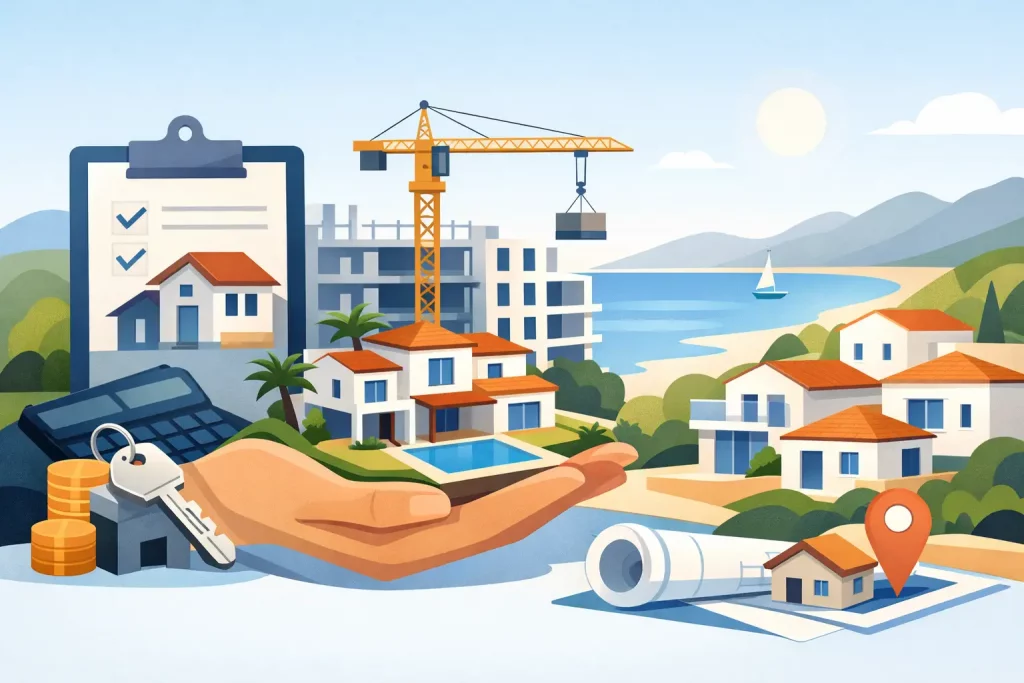
The appeal of new build homes in Spain is easy to understand when you stand on a terrace in the Costa Blanca or Murcia and realise everything is ready for the lifestyle you came for. Clean lines, efficient layouts, communal pools, modern insulation, lift access, parking, and often a short drive to the beach, golf, shops or airport. For many overseas buyers, it feels simpler than taking on an older property that may need work, licences checked or layouts rethought.
But simple does not mean automatic. A good new build purchase comes from matching the right development to the right buyer, understanding what is included, and knowing where the value sits in the local market. That is where experience matters, especially if you are buying from abroad and want clear answers rather than glossy brochure promises.
Why new build homes in Spain attract so many buyers
The strongest advantage is practicality. New homes are designed for how people live now, not how homes were built twenty or thirty years ago. Open-plan living spaces, better natural light, stronger energy performance, pre-installation for air conditioning, secure entry systems and low-maintenance materials all matter when you are buying a holiday home, planning to retire, or investing for future rental demand.
There is also the issue of stock. In many coastal hotspots, well-located resale property can be limited, especially if you want contemporary design, outside space and easy access to amenities. New developments answer that demand. In areas across Costa Blanca North, Costa Blanca South and Murcia, developers are building flats, bungalows, townhouses and villas aimed directly at international buyers who want modern property without a renovation project attached.
For some buyers, off-plan pricing is another attraction. Buying early in a development can offer better entry prices than buying once the project is nearly sold out. That can create room for capital growth during construction, although this depends on location, developer reputation, build quality and wider market conditions. It is not a guarantee, and anyone selling the idea as easy profit is oversimplifying the picture.
What you are really buying
A new build is not just a home. It is a package of specification, location, completion timescale and developer reliability. Two properties with the same number of bedrooms can be very different in long-term value if one sits in a strong, established area with year-round demand and the other is in a less proven location built mainly around marketing appeal.
This is why buyers should look past the show home finish and ask direct questions. What appliances are included? Is underfloor heating standard or extra? What is the orientation? Are there community fees? Is parking included in the price? How far is it really to shops, restaurants, medical services and the beach? Marketing often compresses distance and cost. Real buying decisions should expand them back to reality.
If you are buying for your own use, the key test is lifestyle fit. If you are buying for investment, the key test is resale and rental appeal. A top-floor flat with good outside space, sea views and walkable amenities may outperform a larger but less well-positioned property. Equally, a villa on a spacious plot may suit a permanent relocation far better than a holiday-focused complex of flats.
Off-plan, key-ready or nearly finished?
One of the biggest choices in the new build market is timing. Off-plan homes are bought before completion, sometimes before construction is fully underway. They can offer attractive launch prices and the chance to choose orientation, floor level or certain finishes. The trade-off is waiting time and a greater need to check the developer, payment schedule and legal protections carefully.
Key-ready homes are the opposite. What you see is broadly what you get, and completion can move much faster. This suits buyers who want immediate use, want to avoid construction delays, or prefer certainty over early-stage pricing opportunities.
There is also a middle ground – developments that are well advanced but not yet fully complete. These can be a smart option if you want a better feel for the final product without waiting the full build period. In a fast-moving market, that balance can be very attractive.
Best areas for new build property
Not every buyer needs the same map. Costa Blanca North tends to attract those looking for a more established, scenic and in some cases higher-value market, with strong appeal for lifestyle buyers who prioritise setting, marinas, restaurants and a polished residential feel. Costa Blanca South often offers broader price points, a wide supply of modern developments and strong demand from holiday-home buyers, retirees and golf-oriented purchasers. Murcia continues to draw attention for value, newer resort-style schemes and accessibility, especially for buyers who want more space for their budget.
The right area depends on how you plan to use the property. Frequent holiday visits call for easy airport access and low maintenance. Full relocation puts more weight on year-round services, healthcare, schools and local community. Investment buyers need to think about seasonality, local supply and what future buyers will want, not just what appeals in a sales office today.
The costs buyers must factor in
The purchase price is only part of the financial picture. Buyers of new build homes in Spain should budget for taxes, legal fees, notary costs and land registry charges, alongside any mortgage-related expenses if finance is involved. Depending on the property and region, there may also be community fees, annual property taxes and ongoing utility standing charges.
Then there are the practical extras that are often overlooked in early budgeting. Lighting packs, shower screens, air conditioning, furniture, white goods, landscaping and storage can be included, partly included or excluded entirely. A property that looks competitively priced may not be so competitive once the real move-in cost is added up. This is where detailed, development-specific guidance saves buyers from expensive assumptions.
What to check before you reserve
A serious buyer should always confirm the legal status of the development, the developer track record, the specifications, the stage payment structure and the expected completion date. Reservation terms need to be understood clearly.
You should also ask for clarity on licences, build quality, snagging arrangements and after-sales support. Even strong developments can have minor finishing issues, and the difference between a smooth handover and a frustrating one often comes down to how well the process is managed after the contract is signed.
This is one reason many international buyers choose an established regional agency rather than trying to deal directly with multiple developers in unfamiliar areas. Good guidance narrows the choice quickly, flags the differences between developments that look similar online, and helps you focus on homes that genuinely fit your budget, purpose and timeline.
New build versus resale – which is better?
It depends on the buyer. New build homes make sense if you want modern design, efficiency, lower maintenance and a straightforward start in Spain. They are especially attractive for overseas buyers who do not want refurbishment risk or uncertainty around older paperwork.
Resale homes can still offer advantages. You may get a more established location, larger room sizes, mature surroundings or better value in certain streets and towns. Some resale properties also put you closer to the coast or town centre than many new developments can. The question is not which category is universally better, but which one suits your priorities with the fewest compromises.
For buyers who want choice across both sectors, working with an agency that handles new build, key-ready and resale stock gives you a clearer market view. Fiesta Properties, for example, works across Costa Blanca and Murcia with a wide network and practical support through the buying process, which is exactly what many overseas clients need when comparing multiple routes into the market.
How to approach the market with confidence
The smartest buyers begin with their non-negotiables. Budget, property type, area, timescale and purpose should all be clear before viewings start. That immediately filters out the developments that look good in adverts but do not really fit.
After that, speed matters. Desirable units in successful developments can move quickly, especially south-facing homes, penthouses, ground floors with strong outside space or villas in limited-release phases. Being ready with documentation, finance planning and a clear brief puts you in a stronger position when the right property appears.
Most importantly, keep your judgement commercial. Buy the property that works on paper as well as in the sun. If the location is sound, the specification is right, the costs are understood and the process is properly checked, a new build purchase can be one of the most straightforward ways to secure a home in Spain.
The best result is not simply buying new – it is buying well, in the right place, for the right reason, with proper support from the start.