





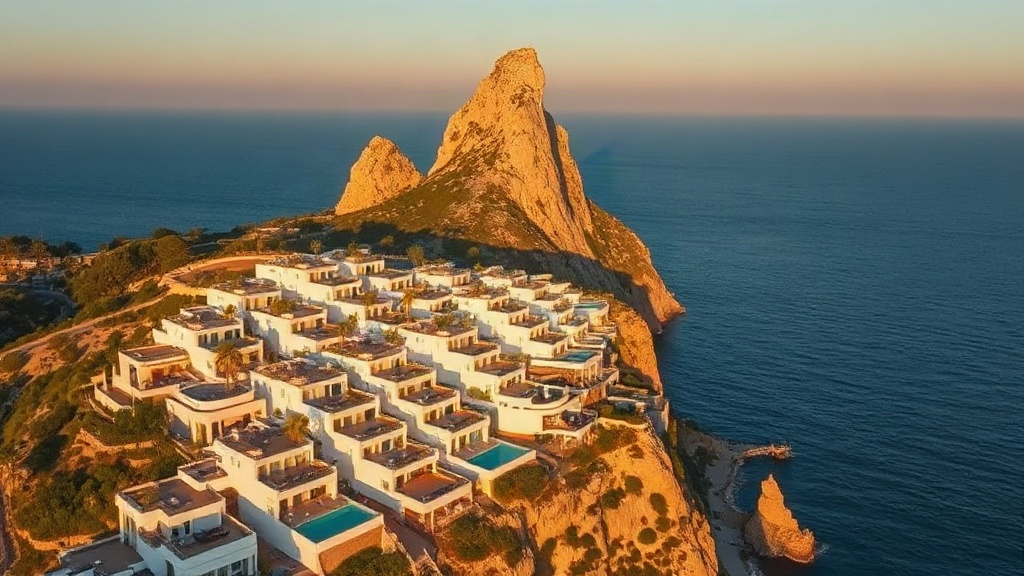
Calpe has quietly positioned itself as one of the Costa Blanca’s most compelling markets for luxury new builds. While coastal towns further south have dominated headlines, this destination has attracted a different calibre of developer and buyer—one focused on quality, location, and long-term value rather than volume alone.
For investors watching the Spanish property market, Calpe represents a shift. The town’s natural assets, combined with tightening development regulations and a mature buyer base, have created conditions where luxury new builds command premiums and hold value. Understanding why requires looking beyond the postcard imagery.
The Peñón Effect: Location Value That Compounds
The Peñón de Ifach isn’t just a landmark—it’s a geographic constraint that fundamentally shapes Calpe’s property dynamics. This 332-metre limestone outcrop limits coastal development to specific zones, creating natural scarcity in prime locations. Developers working on luxury projects here can’t simply expand into adjacent land the way they might in flatter coastal stretches.
This geographic reality translates directly into investment fundamentals. New builds with sea views toward the Peñón occupy finite space. As Calpe’s appeal grows among northern European buyers seeking year-round residence rather than holiday lets, that scarcity becomes more pronounced. The developers responding to this demand aren’t building volume developments—they’re creating smaller, higher-specification projects targeting buyers who view property as a lifestyle anchor, not just an asset.
Regulatory Environment Favouring Quality Over Quantity
Local planning policies in Calpe have tightened considerably over the past decade. Height restrictions, setback requirements, and environmental protections limit what can be built and where. For investors, this might initially seem restrictive. In practice, it filters out lower-tier developments and ensures that new projects meet elevated standards.
The approval process for luxury new builds now emphasises architectural integration, energy efficiency, and community impact. Developers working in Calpe know their projects face scrutiny. This raises barriers to entry but also means completed developments benefit from stricter quality control across the board. When evaluating new build opportunities in Spain, understanding local regulatory frameworks matters as much as location—Calpe’s framework favours investors seeking sustainable value.
Infrastructure Investment Supporting Premium Positioning
Calpe’s infrastructure has matured significantly. The AP-7 motorway provides direct access to Alicante and Valencia airports, while ongoing improvements to the N-332 coastal road reduce journey times to surrounding towns. These aren’t glamorous talking points, but they’re fundamental to rental yields and resale potential.
The town has also invested heavily in pedestrian zones, cycling infrastructure, and coastal walkways. For luxury buyers, these amenities aren’t optional extras—they’re expected foundations. Calpe delivers them consistently, which allows developers to focus marketing on property features rather than compensating for municipal shortcomings.
Medical facilities deserve specific mention. Calpe’s health centre serves a growing permanent resident population, with private clinics expanding to meet demand from international buyers. This infrastructure supports year-round occupancy, which directly impacts rental performance for investors considering letting strategies.
Architectural Innovation Meeting Market Demand
The latest luxury new builds in Calpe reflect evolving buyer priorities. Passive design principles, integrated smart home systems, and sustainable materials have shifted from novelty to standard specification. Developers recognising this transition early have captured market share among buyers willing to pay premiums for future-proofed properties.
Energy certification matters more here than in many Spanish markets. Buyers targeting Calpe often come from northern Europe with higher expectations for insulation, heating efficiency, and renewable energy integration. New builds meeting A-rated certification standards command measurably higher prices and shorter sale periods. This isn’t abstract sustainability marketing—it’s a direct response to buyer demographics.
Outdoor space design has also evolved. Simple terraces have given way to landscaped zones with irrigation systems, outdoor kitchens, and infinity pools positioned to frame the Peñón. These aren’t cosmetic upgrades—they’re integral to how luxury buyers use property in this climate. Developers who understand Mediterranean outdoor living create products that photograph well and live better, which supports both initial sales and long-term appreciation.
Buyer Profiles Driving Market Dynamics
Calpe attracts a specific buyer profile that influences new build characteristics. Unlike holiday-focused markets where rental yield drives decisions, Calpe’s luxury segment draws buyers planning extended stays or permanent relocation. This changes everything about how properties are specified and what features command premiums.
Storage matters here. Home offices matter. Proper kitchens matter. Developers building for this market include larger storage rooms, dedicated workspaces with proper connectivity, and kitchens specified for daily cooking rather than occasional use. These aren’t standard features in all Spanish new builds, but they’re increasingly non-negotiable in Calpe’s luxury segment.
The absence of high-density tourism also shapes buyer appeal. Calpe attracts visitors, but it hasn’t oriented itself around short-term holiday lets the way some coastal towns have. For buyers seeking tranquillity alongside amenities, this balance proves appealing. Developers can market properties on lifestyle and location rather than rental projections alone, which attracts a different investment mindset.
Comparative Market Positioning
Positioned between Altea’s bohemian exclusivity and Benidorm’s volume tourism, Calpe occupies a middle ground that increasingly appeals to investors seeking value without compromise. Prices remain below Altea’s premium while offering superior infrastructure and amenities compared to smaller coastal villages.
This positioning allows luxury new builds in Calpe to capture buyers who find Altea overpriced or under-serviced but want more sophistication than budget-focused developments offer. The market has depth—multiple projects at various price points create liquidity and choice, which supports sustained investor confidence.
Investment Considerations Beyond Purchase Price
Community fees in Calpe’s luxury developments warrant attention. Well-specified buildings with pools, gyms, and landscaped grounds carry higher ongoing costs. However, these fees correlate with property maintenance standards that protect resale values. Investors should evaluate fee structures against services provided and compare them to similar developments regionally.
Rental potential varies significantly by location within Calpe. Properties within walking distance of the port and restaurants achieve higher occupancy rates than those requiring car access. For investors considering rental strategies, location granularity matters as much as property quality. The purchase process should include detailed analysis of comparable rental performance in specific zones.
Completion timelines for new builds have extended industry-wide, but Calpe’s established developers generally maintain more reliable schedules than markets experiencing rapid expansion. This reliability reduces investor risk, particularly for those coordinating sales of existing properties or planning relocation timelines.
Forward Outlook
Calpe’s luxury new build market shows few signs of oversupply. Development sites remain limited, and the regulatory environment continues favouring quality over volume. Demographic trends—northern Europeans seeking better climates for remote work and retirement—support sustained demand for well-specified properties in established coastal towns.
The town’s evolution from seasonal destination to year-round residence hub benefits investors who understand the shift. Properties designed for permanent living rather than holiday use align with where buyer demand is heading, not where it’s been. Developers working in Calpe increasingly recognise this, which elevates the overall market standard.
For investors evaluating opportunities across the Costa Blanca, Calpe merits serious consideration. The combination of natural scarcity, regulatory stability, infrastructure investment, and shifting buyer demographics creates conditions where luxury new builds can deliver both lifestyle and financial returns. The market isn’t without risks—no property market is—but the fundamentals supporting Calpe’s emergence as a luxury destination look increasingly robust.
To view all properties please visit https://fiestaproperties.com/