





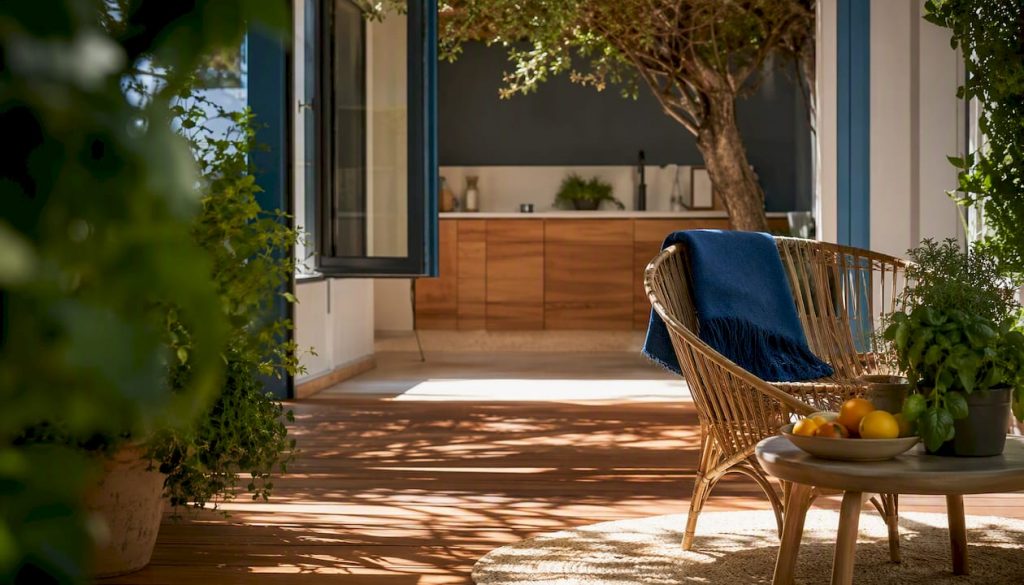
Staging a property before listing it typically sharpens buyer interest and can shorten time on market, particularly on international portals where first impressions form in seconds. The effect isn’t magic. It comes from removing friction between a photo online and a buyer imagining themselves living there.
Before anything else, three tasks deliver the biggest uplift for the least effort:
-
Declutter every room so photos show space, not belongings.
-
Add neutral accents (cushions, throws, a single plant) to soften bare walls without personalising the space.
-
Maximise natural light by opening blinds, cleaning windows, and switching on all lamps before photography.
A deep clean matters just as much as styling. Marks on tiles or dusty skirting boards show up starkly on camera, even when they’re barely noticeable in person. Get these basics right and your listing photos improve immediately, which matters because portal click-throughs are usually the first hurdle a Spanish sale has to clear.
TL;DR:
Most staging efforts should focus on decluttering, cleaning, and maximizing natural light, as these actions offer the best return for low cost.
For higher-value properties, investing in professional staging and furniture hire can lead to faster sales and higher offers, justified by buyer expectations.
Virtual staging works well for online portals and lower-priority listings, while physical staging is better suited for in-person viewings of premium homes.
Proper price estimation before staging ensures a realistic budget, with tools like online calculators providing useful guidance.
Carefully vet any professional stager by requesting portfolios, clear fee structures, and a plan for de-staging after marketing efforts.
Table of Contents
Why staging a home in Spain affects sale speed and price
Staging works because it changes what happens before a buyer ever calls an agent. Most house hunts in Spain now start online, and a listing’s photos decide whether someone clicks through or scrolls past. A tidier, better-lit set of images typically pulls more enquiries than the same property shot cluttered and dim.
International buyers add another layer. Many are viewing remotely for weeks before flying over, and they lean heavily on move-in readiness as a proxy for how well a property has been maintained. Personal clutter or dated furnishings read as extra work, even when the underlying property is sound.
Staging also softens buyer nerves about renovation risk. A well-presented kitchen or bathroom suggests fewer surprises behind the walls, which tends to translate into stronger offers or a quicker path to agreement. Luxury staging specialists note that staged properties with vendors reporting faster exits once a property has been properly presented.
-
Sharper photos mean more portal clicks and more viewing requests.
-
Neutral, move-in-ready styling appeals directly to international buyers comparing properties from abroad.
-
Reduced perceived risk can support firmer offers and a faster sale.
Room-by-room staging checklist before photos and viewings
Work through a property in the order a buyer actually experiences it, starting at the front door and finishing in the bedrooms. This keeps effort focused where it counts most.
-
Entrance and curb appeal. Sweep the path, tidy any pots, add one healthy plant, and repaint the front door if it’s faded. First impressions on arrival shape everything that follows.
-
Living room. Remove excess furniture to open up floor space, swap busy patterns for neutral soft furnishings, and define a clear seating zone. Pull curtains fully back to maximise light.
-
Kitchen. Clear every worktop except one or two considered items, replace worn cupboard handles if the budget allows, and make sure appliances are spotless.
-
Bathrooms. Remove personal toiletries, replace tired mats and towels with plain white or neutral sets, and check grout and mirrors are genuinely clean, not just tidy.
-
Bedrooms. Use neutral bedding, clear surfaces of personal photos, and show off storage by half-emptying wardrobes rather than stuffing them out of sight.
-
Repairs and odours. Fix dripping taps, sticking doors, and chipped paintwork; air the property thoroughly and deal with any pet or damp smells before the first viewing.
If the property is destined for the holiday rental market rather than a permanent sale, buyers tend to focus more on lifestyle cues (a ready-to-use terrace, a stocked kitchen feel) than on move-in practicality, so styling can lean slightly more aspirational.
Photography deserves its own checklist. Shoot at the same time of day you plan to use for the final listing images, since consistent natural light produces truer colours and cuts down on post-processing. Declutter surfaces one more time immediately before the camera comes out, and capture a mix of wide room shots and closer detail images that show finishes and views.
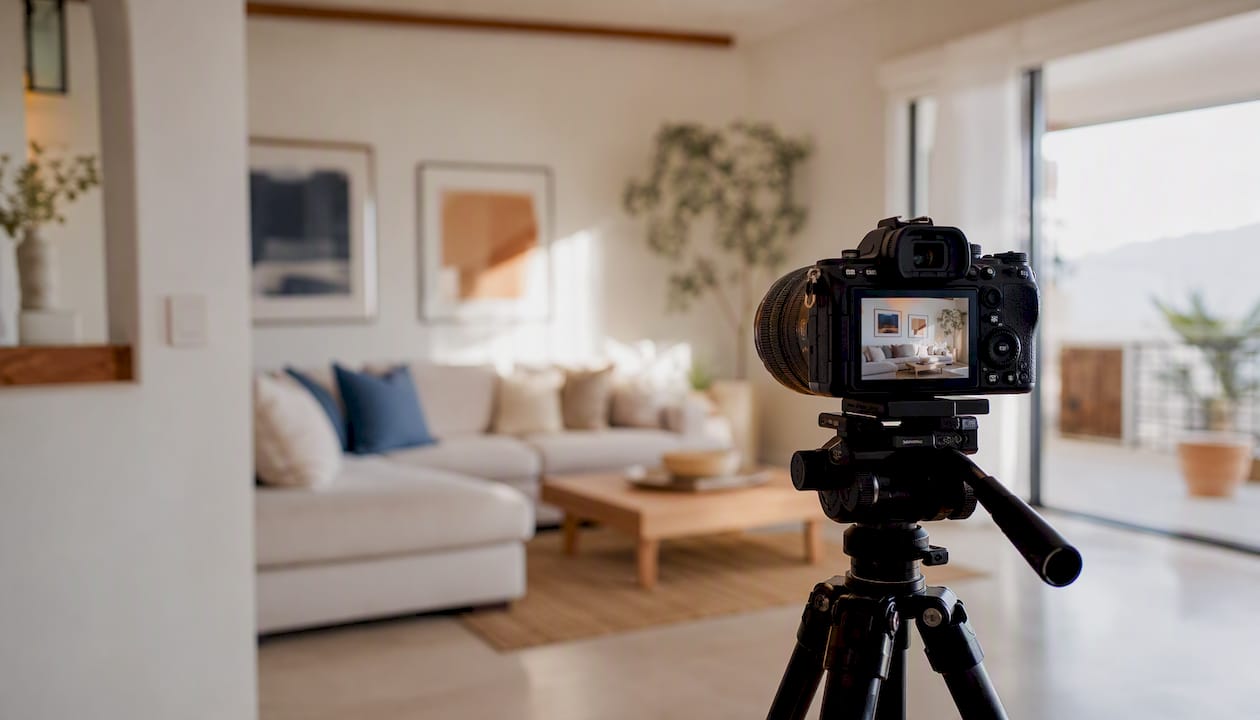
Pro Tip: Walk the property with your phone camera before the professional shoot. If a shot looks cramped or messy on a small screen, a buyer scrolling on their phone will see the same thing.
What staging costs in Spain and the return you can expect
Staging spend in Spain generally falls into three bands. A DIY approach covering decluttering, cleaning, and a few soft furnishing swaps costs very little beyond time and a modest shopping trip. Mid-range stylist services, where a professional advises on layout and brings in some accessories or rental furniture, sit in the middle. Full-service staging with furniture hire for an entire property is reserved mostly for Luxury villas where presentation carries real weight with international buyers.
Deciding how much to spend depends on three factors:
-
Time pressure. A property that needs to move quickly justifies a bigger push on presentation than one with no deadline.
-
Price band. Higher-value listings attract buyers who expect polish, so the return on staging spend tends to scale with asking price.
-
Buyer profile. Investors often care more about numbers than styling, while family buyers and holiday-home purchasers respond strongly to a lived-in, welcoming feel.
Virtual staging or physical staging: which suits your listing?
Virtual staging means digitally furnishing empty rooms in photographs, and it’s usually the cheaper, faster route to photography-ready images. It works well for portal listings where the goal is simply to help buyers picture a layout rather than convince them at a physical viewing.
Physical staging earns its cost back at the viewing stage. Buyers walking through a well-staged home get a genuine sense of scale, flow, and how furniture actually fits, which digital images can’t replicate in person. This matters most for higher-value properties where a buyer’s decision hinges on a strong in-person impression.
-
Use virtual staging for broad portal visibility on empty or lower-priority listings.
-
Use physical staging for properties where in-person viewings are likely and the price point justifies the spend.
-
A hybrid approach, virtual images for the listing and physical staging reserved for your best-performing or highest-value properties, often gives the strongest balance between cost and impact.
Should you hire a professional stager or do it yourself?
The decision usually comes down to three things: how much time you have, the property’s current condition, and the price band you’re selling into. A property in good condition selling quickly at a modest price rarely needs more than a confident DIY effort. A higher-value or harder-to-sell property benefits more from professional input.
Professional staging services typically include layout advice, furniture hire, and coordination with the photographer so shoot day runs smoothly rather than being scheduled around half-finished styling.
Before hiring anyone, ask to see a portfolio of completed work, get clear written fees rather than vague estimates, and confirm there’s a de-staging plan for removing hired furniture once photography and viewings are done.
-
No portfolio or references available.
-
Fees quoted verbally with no breakdown.
-
No clear plan for removing staged items after the shoot.
Pro Tip: Ask a prospective stager how long their furniture rental period lasts. Some quote per-shoot pricing, others charge for weeks of viewings, and the gap between the two can be significant.
How Fiesta Properties builds staging into a Spanish listing
Fiesta Properties has worked across Costa Blanca and Murcia since 2010, marketing new build, key-ready, and second-hand properties through international portals and social media alongside more traditional local channels. Staging fits naturally into that process rather than sitting apart from it.
A typical staged listing follows a straightforward sequence: a site survey to assess what the property needs, styling recommendations or coordination with a stylist, a professional photography session timed for the best light, listing across Fiesta Properties’ network and partner portals, and a de-staging step once viewings are complete.
A property that photographs well travels further. On an international portal, that first image is often the only chance a listing gets to hold a buyer’s attention long enough for them to enquire.
Sellers who want help arranging staging can start by reviewing the buying process Fiesta Properties uses with clients, which outlines how listing preparation, marketing, and viewings connect from the first survey through to completion.
Why most sellers overinvest in the wrong staging tasks
The biggest gap between staging advice and staging reality is where sellers put their effort. Conventional wisdom leans hard on furniture and accessories, when the evidence from staged property tours consistently points to lighting, decluttering, and small repairs as the tasks that actually move buyer perception. A property doesn’t need designer furniture to photograph well. It needs clear surfaces, good light, and nothing broken.
I’d also push back on the idea that staging is a single decision made once. Spain’s market includes buyers who never set foot in the country before their first viewing, and that changes the calculus. A listing photographed badly loses those buyers before an agent even gets the chance to speak with them. Spend your first pound or euro on photography-readiness, not on hired sofas.
If you take one thing from this, prioritise the free and cheap fixes first: decluttering, cleaning, and light. Only stretch to hired furniture or a professional stylist once you’ve confirmed the property’s price band justifies the spend, and once you’ve checked that price against a proper market estimate rather than a guess.
— Mike
Key Takeaways
Staging a home in Spain improves listing photos and buyer perception, and the highest-impact work is nearly always the cheapest: decluttering, cleaning, and light.
| Point | Details |
|---|---|
| Start with the basics | Declutter, deep clean, and maximise natural light before any photography session. |
| Match spend to price band | Reserve full furniture hire and professional stylists for higher-value listings where buyers expect polish. |
| Set price before staging budget | Check an online valuation tool first, then decide how much staging spend the listing can justify. |
| Choose virtual or physical deliberately | Use virtual staging for broad portal reach and physical staging for priority viewings on higher-value homes. |
| Vet any stager carefully | Ask for a portfolio, written fees, and a clear de-staging plan before hiring. |