





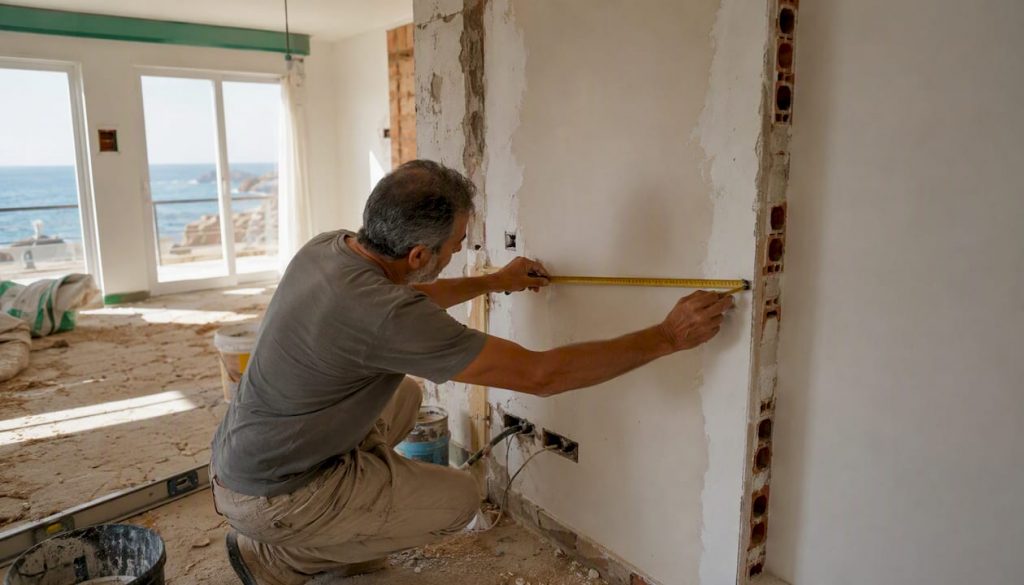
Budget €900 to €1,900 per square metre for a full integral reform in 2026, and €200 to €600 per square metre for a cosmetic refresh, depending on the region. A typical 90 m² coastal flat runs €100,000 to €130,000 for a complete renovation. Costs swing sharply by region, VAT status and licence type, so the first move before signing anything is to get three itemised quotes and an architect’s inspection.
TL;DR:
- Regional variation significantly impacts renovation costs, with major cities charging up to €1,900 per m² for full reforms and coastal hotspots tending to be higher.
- Obtaining three itemized quotes with clearly defined scope and avoiding vague line items helps prevent large budget overruns and hidden costs.
- Major structural work requires full permits and an architect’s sign-off, which can extend approval times from a few days to several months depending on the municipality.
- VAT reduction to 10% applies only if high-value materials are invoiced separately and kept under 40% of the project’s tax base; otherwise, the rate jumps to 21%.
- Adding a contingency of 10% to 15% is essential to cover unexpected issues like hidden defects, seasonal delays, or extra licensing costs.
Table of Contents
- What do renovation costs in Spain actually look like in 2026?
- When do you need planning permission for renovation work?
- How does VAT affect your renovation invoice?
- How do you get accurate, comparable quotes from contractors?
- Why do renovation costs vary so much between regions?
- What does a full renovation actually cost for a 90 m² flat?
- How long does a renovation take, and what pushes the price up?
- How Fiesta Properties helps you avoid renovation surprises
- Fiesta Properties: fewer renovation surprises, more certainty upfront
- Sources
What do renovation costs in Spain actually look like in 2026?
Spanish contractors quote per square metre, and the figure changes depending on how deep the work goes. A cosmetic refresh, meaning new paint, flooring and fittings without touching layout or services, typically costs €200 to €400 per square metre in mid-range cities, rising to €350 to €600 per square metre in Madrid, Barcelona or Mallorca. A full integral reform, where walls move, plumbing and electrics are replaced, and every room is finished from scratch, runs €900 to €1,300 per square metre in mid-sized cities and €1,300 to €1,900 per square metre in the major hotspots.
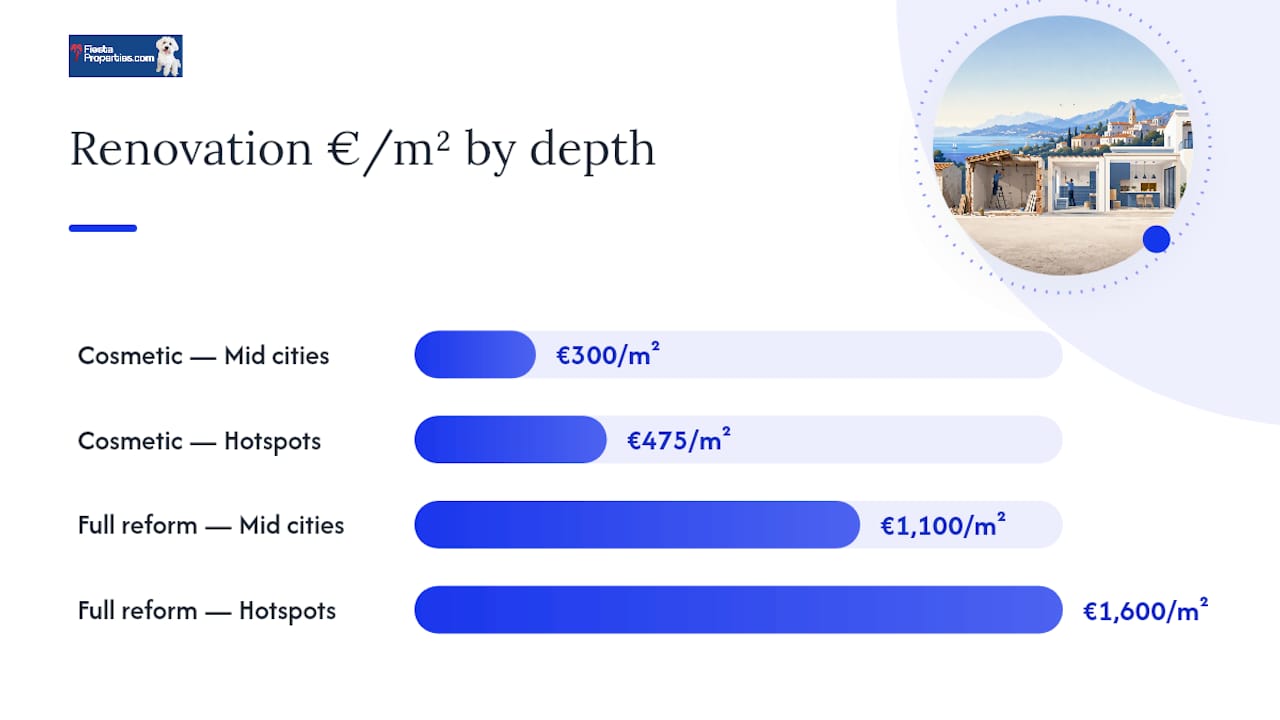
These figures cover labour and standard-grade materials. They generally exclude licence fees, architect or technical director costs, VAT, and furniture, so a quoted €/m² band is the starting point of your budget, not the end of it.
Three project sizes give a feel for what that means in practice. A single kitchen renovation in a mid-range city, roughly 12 m² including new units, worktop and appliances, tends to land between €8,000 and €14,000. A medium project covering one bathroom plus a general refresh of a two-bedroom flat, say 70 m², often totals €25,000 to €40,000. A large integral reform of a 90 m² flat, the scenario most UK buyers actually face when they buy an older resale property, sits at €80,000 to €170,000 once you account for regional variation.
The gap between the lower and upper end of each band usually comes down to finish quality and how much of the property’s layout changes. Moving a bathroom to a new wall, for instance, adds plumbing rerouting costs that a like-for-like refit never incurs. Builders will often quote the lower figure at first contact and only reveal the layout-change premium once they’ve seen the property in person, which is one more reason a written, itemised presupuesto matters more than a verbal estimate.
When do you need planning permission for renovation work?
Spanish municipalities split renovation work into two legal categories, and which one your project falls into decides how long approval takes and whether an architect is mandatory.
Obra menor (minor works) covers changes that don’t touch structure, façade or the building’s overall volume. Repainting, replacing floor tiles, updating a kitchen within its existing footprint, or swapping bathroom fittings without moving plumbing all typically qualify. Most town halls process these through a declaración responsable or comunicación previa, a simple notification rather than a full licence, and work can often start within days once the paperwork is filed.
Obra mayor (major works) applies when you touch structural elements, change the building’s use, alter the façade, or increase floor area. Knocking through a load-bearing wall, adding a room, or restructuring a roof all sit in this category, and they require a full municipal licence plus a project signed off by a qualified architect.
A few points worth flagging before you start:
- Municipalities charge ICIO (Impuesto sobre Construcciones, Instalaciones y Obras), a local construction tax typically running 2% to 4% of the Presupuesto de Ejecución Material, the official material execution budget stated in your project.
- If the final cost of the works exceeds the declared PEM, some town halls will issue a supplementary ICIO bill once the project closes, so under-declaring the budget to save tax rarely pays off.
- Approval windows vary widely: a declaración responsable for obra menor can clear in under a week in some municipalities, while a full obra mayor licence can take several weeks to a few months depending on the town hall’s backlog.
- As a practical rule, hire a licensed architect whenever the work is structural, changes the roofline, or affects a shared building element, even if your local town hall would technically accept a lighter procedure.
Skipping this step is one of the more common regrets among UK buyers who renovate without local legal guidance, because retrospective licensing for unauthorised structural work can be slow, costly and, in some cases, impossible.
How does VAT affect your renovation invoice?
The reduced 10% IVA rate applies to residential renovation labour when three conditions are met: the property is over two years old, it’s used as a residence rather than a commercial unit, and the materials the contractor supplies stay under 40% of the invoice’s tax base.
The 40% trap: many UK buyers lose the reduced rate without realising it, simply because their contractor supplied a high-end kitchen or bathroom suite as part of the same invoice. Once material costs push past that 40% line, the tax authority treats the whole job as a supply of goods rather than a service, and the rate jumps from 10% to 21%.
That single distinction can add thousands of euros to a mid-sized project, which is why experienced buyers use a specific workaround:
- Ask your contractor to invoice labour separately from expensive fitted items like kitchens, bathroom suites or premium flooring.
- Buy high-value materials directly from suppliers yourself, keeping them off the contractor’s invoice entirely.
- Keep every material and labour invoice itemised, since a mixed invoice with vague line items is exactly what the 40% test is designed to catch.
Separately, if your renovation improves the property’s energy performance, insulation upgrades, window replacements, or heating system changes, you may qualify for an IRPF deduction of 20% to 40% of the cost against Spanish income tax, provided you obtain an energy performance certificate both before and after the works. That deduction only benefits Spanish taxpayers filing an IRPF return, so its relevance depends on your residency status. Because both the VAT rules and the energy deduction hinge on your specific circumstances, a short consultation with a Spanish gestor or tax adviser before work starts is worth the fee many times over.
How do you get accurate, comparable quotes from contractors?
Three quotes for the same job can differ by tens of thousands of euros, not because one contractor is dishonest, but because each has priced a slightly different scope. The fix is a written brief detailed enough that every contractor is pricing the identical job.
A proper presupuesto should include:
- Exact line items for every room and task, not lump-sum totals for “kitchen” or “bathroom.”
- Named brands or model references for fittings, tiles and appliances, so “standard tap” doesn’t turn into a €300 upgrade halfway through.
- A clear statement on risers and plumbing: will existing pipework be reused or replaced, and who’s liable if reused pipework fails later?
- Waste management costs as a separate line, since skip hire and disposal fees are often bundled vaguely or left off entirely.
- A clear statement of who supplies materials, you or the contractor, given the VAT implications outlined above.
- Payment schedule and retention terms, ideally tied to completed stages rather than a flat deposit-then-balance structure.
Send the same written brief to every contractor you approach. If one quote comes in noticeably lower, check whether it has quietly dropped a line item the others included, rather than assuming it’s simply the better deal.
For anything beyond a cosmetic refresh, budgeting 4% to 8% of the project cost for an architect or independent project manager acting on your behalf is sensible insurance. Their job is to catch scope creep, verify that work matches the signed specification, and negotiate on your behalf when unexpected issues surface, which they usually do.
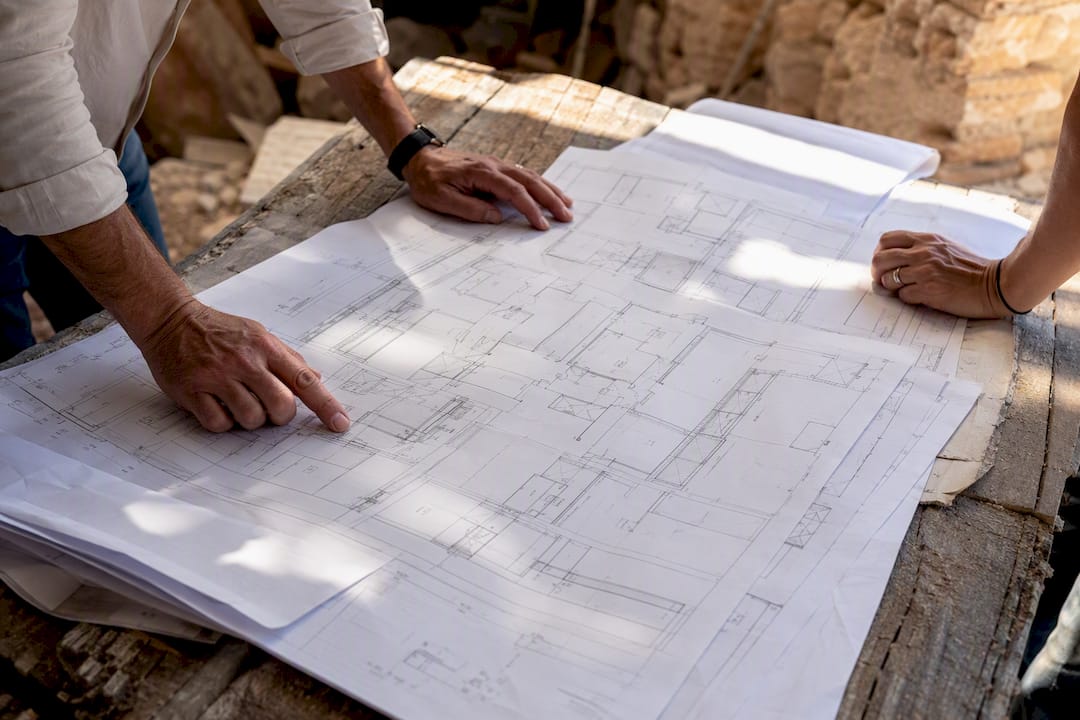
Pro Tip: Flag any line marked “a definir” (to be defined) or “según necesidad” (as needed) before you sign. These phrases hand the contractor a blank cheque and are the single most common source of budget blowouts on Spanish renovation contracts.
Why do renovation costs vary so much between regions?
Three variables drive the spread between a quote in a quiet inland town and one in Marbella or Ibiza Town: the size and shape of the property, the finish quality specified, and the location itself.
Location covers more than prestige pricing. Labour rates differ meaningfully between provinces, licence processing costs and timelines vary by town hall, and waste management charges depend on local disposal infrastructure, all of which stack into the final invoice even when two properties are architecturally identical.
Kitchens and bathrooms carry a cost premium over living spaces because of concentrated plumbing, electrics and waterproofing work packed into a small footprint. Regional calculators commonly apply a multiplier of around 1.30 for kitchens and 1.40 for bathrooms relative to a baseline living-area rate, which explains why a 90 m² flat with two bathrooms costs disproportionately more per square metre than an equivalent flat with one.
| Region type | Typical labour cost impact | Licence and waste cost impact |
|---|---|---|
| Coastal hotspot (Costa Blanca, Costa del Sol) | Higher, driven by seasonal demand | Moderate to high |
| Major city (Madrid, Barcelona) | Highest | Highest |
| Inland or smaller town | Lower | Lower |
Using a national average to budget a Costa Blanca renovation risks under-budgeting, since region-specific calculators that factor in local licence and disposal costs tend to produce a more realistic figure than a blanket nationwide estimate. Asking two or three local contractors for reference quotes on comparable recent jobs achieves much the same result without any software at all.
What does a full renovation actually cost for a 90 m² flat?
Two scenarios show how the ranges above translate into a real, all-in budget for a typical 90 m² coastal apartment needing a full integral reform, based on a mid-Costa Blanca location.
This sits close to the commonly cited €100,000 to €130,000 rule of thumb for a 90 m² integral reform at the mid-spec end, with the high-spec scenario climbing further once premium finishes push some materials past the 10% VAT threshold. At current exchange rates, that mid-spec total sits roughly around £91,000, though sterling-euro movement can shift that figure meaningfully, so treat any GBP conversion as a rough guide rather than a fixed number when planning transfers.
How long does a renovation take, and what pushes the price up?
Expect four to eight weeks simply to gather and compare quotes properly, another two to twelve weeks for municipal approval depending on whether you need obra menor or obra mayor sign-off, and then three to six months for the physical works on a full 90 m² integral reform. Rushing the quoting stage to save time is the single most common cause of budget overruns.
Several costs catch UK buyers out because they rarely appear in an initial verbal estimate:
- Waste container charges for skip hire and disposal, often billed separately from the main works.
- Supplementary ICIO bills if the finished project cost exceeds the declared budget on your licence application.
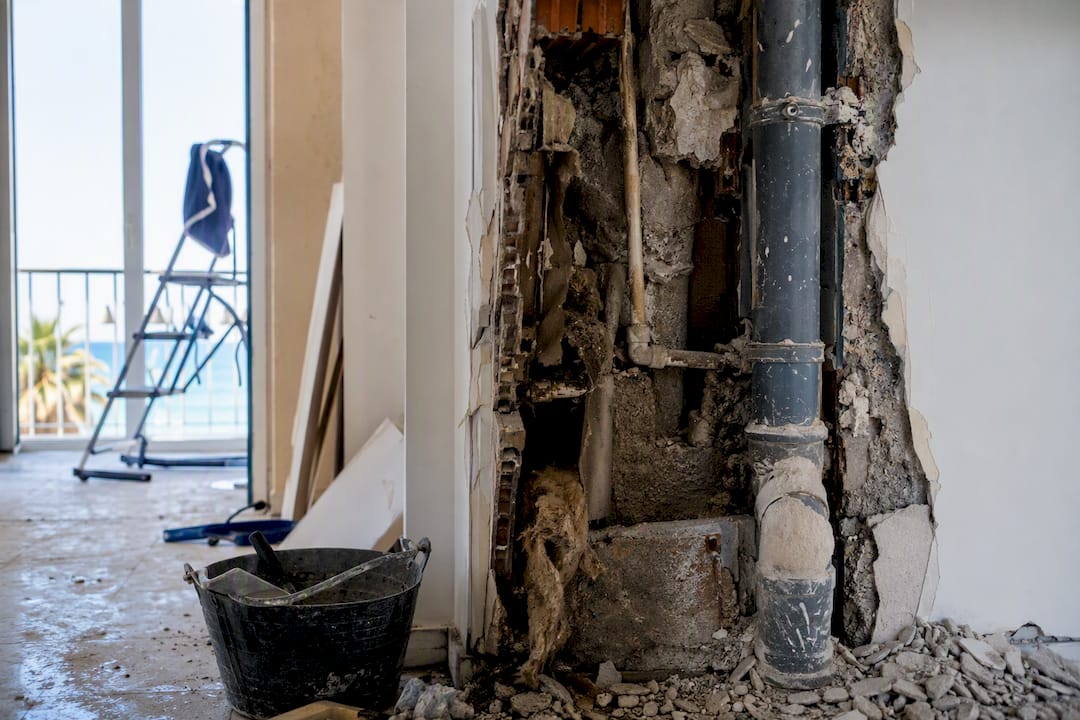
- Remedial works for hidden defects, damp, outdated wiring, or structural issues behind old plaster, discovered only once demolition starts.
- Seasonal labour shortages during the spring and summer building season on the coast, which can both delay start dates and push contractor rates upward.
Three tactics reduce exposure to all of the above: staged contract payments tied to completed milestones rather than time elapsed, a retention of 5% to 10% held back until snagging is resolved, and written acceptance criteria for each stage so disputes over “finished” work don’t stall the schedule.
Pro Tip: Add a 10% to 15% contingency line to every renovation budget in Spain, not as a formality but as a working assumption. Hidden defects in older coastal properties are common enough that experienced buyers treat contingency as part of the base cost, not an emergency fund.
How Fiesta Properties helps you avoid renovation surprises
Fiestaproperties has worked across Costa Blanca and Murcia since 2010, with an inventory spanning new build, key-ready and second-hand homes, and that range matters because it lets buyers weigh renovation exposure before they commit. During the arras period, our team can arrange local contractor walk-throughs and put buyers in touch with technical professionals who understand regional pricing. Fiestaproperties sources lower-risk property and local contacts. It doesn’t act as a general contractor, and any renovation contract remains between you and your chosen professionals.
— Mike
Fiesta Properties: fewer renovation surprises, more certainty upfront
If the numbers above have you weighing whether a fixer-upper is worth the hassle, there’s a simpler route: buy a property that needs little or nothing done to it. Fiestaproperties is the practical alternative to gambling on an old resale and its hidden defects, because our new build and key-ready listings across Costa Blanca and Murcia let you skip the quoting, licensing and contingency budgeting altogether.

Our buying process is built specifically for UK buyers who want a straightforward purchase with local support at every stage, from viewing through to completion. If you’d rather browse move-in-ready stock than budget for an integral reform, our new build properties across Costa Blanca and key-ready homes are a good starting point. Get in touch through Fiestaproperties and we’ll talk you through current listings that match your budget and renovation appetite.
Sources
For legal confirmation on planning categories, consult property-lawyers.com’s guide to planning permissions in Spain. Cost bands and VAT rules referenced here come from Buvivo’s 2026 reformas guide, GuiaReformas’ regional pricing data and Spain Handbook’s renovation budgeting guide. Always confirm VAT eligibility and ICIO rates with a local gestor or Spanish tax adviser for your specific property.